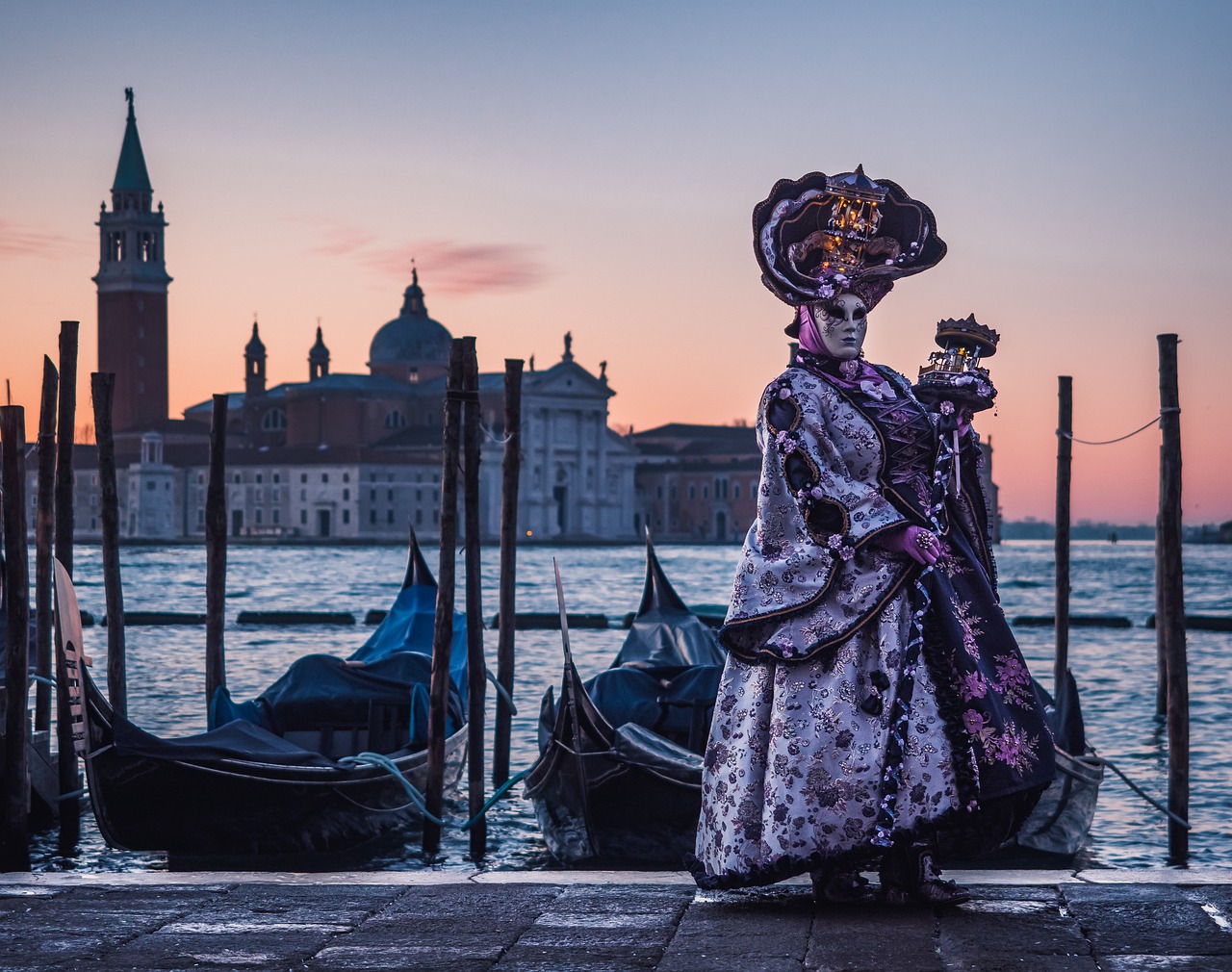
Walk through Venice during Carnival and you’ll see masks everywhere. Hung in shop windows, worn by costumed figures in Piazza San Marco, stacked on vendor tables along the Rialto Bridge.
Most of them are made in China.
This isn’t said to shame anyone who buys one. It’s said because understanding the difference between a souvenir and authentic Venetian craftsmanship changes how you see the city — and what you choose to bring home.
Real Venetian masks have a history that goes far beyond Carnival. They were tools of freedom, symbols of anonymity, and eventually, objects banned by law. The story behind them reveals a Venice most visitors never discover.
Why Venetians Wore Masks (And It Wasn’t Just for Parties)
Masks in Venice served a purpose that modern tourists rarely understand. They weren’t costumes. They were social technology.
In a city as small and densely populated as Venice, everyone knew everyone. Your family name, your social class, your debts, your scandals — all of it was public knowledge. Masks provided something rare and valuable: anonymity.
The bauta — the most iconic Venetian mask — allowed wearers to move through society incognito. Nobles could gamble in public gambling houses without shame. Women could attend theater performances unchaperoned. Merchants could conduct business without revealing their identity. The mask created a temporary equality that Venice’s rigid class system normally forbade.
The Republic of Venice recognized this and actually required masks in certain contexts. During Carnival, obviously. But also during important government meetings, where masks ensured that voting remained anonymous and corruption harder to trace.
This wasn’t playful. This was political.
The Types of Masks That Actually Matter
When I take visitors to authentic mask-making workshops on my artisan tours, they’re always surprised by how specific the tradition is. Venetian masks weren’t random designs. Each type had a purpose and a history.
The Bauta: The white face mask with a protruding chin and no mouth opening. Worn with a black cloak (tabarro) and tricorn hat, it was the standard disguise for anyone seeking anonymity. The chin design allowed the wearer to eat and drink without removing the mask.
The Moretta (or Servetta Muta): A black oval mask held in place by a button clenched between the wearer’s teeth. Because it couldn’t be removed to speak, it forced women into silence — which tells you something about 18th-century attitudes. Also called the “mute servant.”
The Medico della Peste: The plague doctor mask with its distinctive long beak. Not originally a Carnival mask at all. Plague doctors wore these during epidemics, filling the beak with aromatic herbs they believed would protect them from infection. Today it’s become a dark symbol of Venice’s history with disease.
The Volto (or Larva): A full-face white mask that covered the entire face. Simple, elegant, anonymous. Often painted or decorated, but always recognizable by its blank expression.
You can see authentic examples of these historical masks at Ca’ Rezzonico Museum, which displays 18th-century Venetian life exactly as it was — including complete Carnival costumes worn by the aristocracy.
When Venice Banned Masks (And Why)
In 1797, Napoleon conquered Venice and ended the Republic. One of his first acts was banning masks entirely.
This wasn’t random cultural suppression. Napoleon understood what Venetian authorities had always known: masks gave people dangerous freedom. Anonymity threatened state control. If citizens could move through society without being identified, they could organize, resist, plot.
The ban lasted nearly two centuries. Masks disappeared from daily life. The mascareri — professional mask makers — either closed their workshops or shifted to other crafts. The tradition nearly died.
When Venice revived Carnival in 1979 as a tourist attraction, very few people still knew how to make traditional masks properly. The craft had to be relearned, techniques reconstructed from old examples and descriptions.
Today, perhaps twenty workshops in Venice still make masks by hand using traditional methods. The rest — the hundreds of shops selling masks for €5 or €10 — sell mass-produced imports.
How Real Masks Are Made (And Why It Matters)
I’ve watched artisans make masks dozens of times, and the process still fascinates me.
Traditional Venetian masks start with clay molds. The mask maker sculpts the original form in clay, then creates a plaster negative mold. Layers of papier-mâché are pressed into this mold, building up thickness gradually. Once dry, the mask is removed, trimmed, sanded smooth, and sealed with gesso.
Then comes the artistry: hand-painting, gilding, decorating with fabrics, feathers, jewels. Every detail done individually. A single elaborate mask can take weeks to complete.
The difference between a handmade mask and a factory product is immediately obvious once you know what to look for. The weight, the smoothness of the surface, the precision of the painting, the way it conforms to the face — authentic masks feel alive. Cheap ones feel like plastic shells.
Modern interpretations of traditional designs exist too. Ca’ Pesaro, Venice’s museum of modern art, showcases how contemporary Venetian artists have reimagined traditional crafts — including masks that push the boundaries of the form while respecting its history.
Where to Find Authentic Mask Makers
Most mask shops in Venice are just retail stores selling imported products. Finding actual workshops requires knowing where to look.
Ca’ Macana in Dorsoduro is probably the most famous. They’ve supplied masks for Hollywood films, including Eyes Wide Shut. Their workshop includes a small museum showing the evolution of mask design.
Atelier Marega near Campo Santa Maria Formosa makes traditional masks using centuries-old techniques. The workshop is tiny — barely bigger than a closet — but the craftsmanship is extraordinary.
Tragicomica in San Polo specializes in full Commedia dell’Arte costumes alongside masks. Their pieces lean theatrical, perfect if you’re attending one of Carnival’s grand balls.
These aren’t stores. They’re working studios where you can watch artisans shape, paint, and decorate masks. The prices reflect the labor involved — authentic masks start around €80 and climb quickly for elaborate designs.
When I guide clients interested in Venetian craftsmanship, I always include workshop visits. Not shopping tours. Actual encounters with people who’ve dedicated their lives to keeping these traditions alive. The conversations matter as much as the objects.
The Dark History Nobody Mentions
Masks in Venice weren’t only about freedom and celebration. They also enabled crime.
Historical records document countless thefts, assaults, and murders committed by masked individuals. The anonymity that let nobles gamble freely also let criminals operate with impunity. Women were harassed by masked men in the streets. Debts went unpaid because creditors couldn’t identify debtors.
The Republic tried repeatedly to regulate mask use — limiting which months they could be worn, which social classes could wear them, which designs were permitted. These laws were constantly broken and constantly rewritten.
By the 18th century, Venice had a reputation across Europe for both artistic brilliance and moral decay. Masks symbolized both. The city’s complexity is part of why it continues fascinating people centuries later.
Should You Buy a Mask?
If you’re asking purely as a souvenir question: maybe.
An authentic Venetian mask is beautiful, carries genuine history, and supports local artisans. If you appreciate craftsmanship and want something meaningful from Venice, it’s a worthy purchase.
But don’t buy one feeling obligated. Venice has countless ways to connect with its culture, and not all of them involve shopping.
If you do decide to buy, here’s what to look for:
- Weight: Real papier-mâché has substance. Cheap masks feel hollow.
- Surface texture: Hand-finished masks are perfectly smooth. Factory masks show mold seams.
- Paint quality: Handpainted details have depth and precision. Printed designs look flat.
- Price: Authentic masks start around €80. If it costs €10, it’s not handmade.
- Workshop presence: Real mask makers work in visible studios. Pure retail shops are importing.
The artisans I know appreciate when visitors understand the difference, even if they don’t buy. Curiosity and respect matter more than sales.
Carnival Is When Masks Come Alive
During the two weeks of Carnival, Venice becomes a living theater where history and fantasy merge.
You’ll see people wearing elaborate costumes that cost thousands of euros — complete historical recreations with wigs, jewelry, and hand-sewn fabrics. These aren’t tourists playing dress-up. Many are Venetians and regular Carnival attendees who’ve invested years building their costumes.
In Piazza San Marco, professional models pose for photographs wearing museum-quality costumes and masks. They’re hired by photography studios, and yes, they charge for photos. But they also represent the serious end of Carnival culture — people who treat masquerade as an art form.
The most authentic Carnival experiences happen away from the main squares, in neighborhood celebrations where locals gather in costume. These events feel less performative, more genuinely festive.
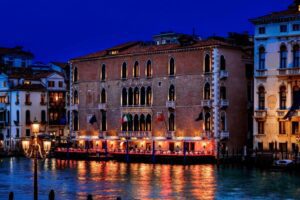
Attending one of Carnival’s grand masked balls — held in historic palaces like Ca’ Vendramin Calergi or Palazzo Pisani Moretta — offers the full experience. Tickets are expensive (€400-800), but you’re not paying for a party. You’re paying to inhabit Venice as it was, surrounded by frescoed ceilings and candlelight, everyone anonymous behind their masks.
What the Masks Mean Today
Contemporary Venice has a complicated relationship with masks.
For artisans, they represent a living tradition worth preserving. For tourists, they’re exotic souvenirs and photo opportunities. For Venetians, they’re both cultural heritage and commercial exploitation.
Walk through Venice outside Carnival and you’ll notice something: locals rarely engage with mask shops. They’re designed for visitors. The tradition is real, but its current form is shaped by tourism in ways that would have been unrecognizable to 18th-century Venetians.
This doesn’t make masks less interesting. It makes them more interesting — a craft that died, was resurrected, and now exists in a form that’s simultaneously authentic and invented.
Understanding that complexity is part of understanding Venice itself. Nothing here is simple. Everything has layers.
Plan Your Mask Experience
For museum context: Visit Ca’ Rezzonico to see authentic historical costumes and masks in the setting where they were actually worn.
For contemporary artistry: Ca’ Pesaro’s modern art collection shows how Venetian artists continue reimagining traditional forms.
For hands-on experience: Join me for an artisan workshop tour where you’ll meet mask makers, watch them work, and learn techniques passed down through generations.
For the complete picture: A private Venice walking tour can connect masks to the broader story of Venetian culture — how art, commerce, secrecy, and spectacle shaped this impossible city.
Discover the Real Craft Behind Venice’s Most Iconic Symbol
In 28 years guiding Venice, I’ve built relationships with the city’s finest artisans — the ones who learned from masters, not factories. Let me introduce you to the Venice that NBC, Rick Steves, and US Today featured me to share.
Book your private Venice artisan tour or skip the lines at Venice’s cultural treasures — experience the craftsmanship, history, and artistry that make Venice extraordinary.