Venice is extraordinary. But Venice is also small.
The historic island holds more art, history, and beauty per square meter than almost any place on earth. But it’s still an island. Walking its entirety takes a single determined day. After two or three days of intensive exploration, even the most passionate Venice lover begins feeling the pull of something beyond the lagoon.
The Veneto region surrounding Venice is one of Italy’s most rewarding and least visited areas. Within 30 minutes to two hours of Venice, you’ll find Roman arenas, medieval hill towns, UNESCO World Heritage landscapes, Renaissance masterpieces, and wine regions producing some of Italy’s finest bottles. Most visitors never explore any of it.
This isn’t because these destinations aren’t worth visiting. It’s because Venice dominates the travel conversation so completely that the region around it becomes invisible. Padua holds one of Europe’s greatest fresco cycles — and most Venice visitors have never heard of it. Verona offers Shakespeare’s setting and a 2,000-year-old Roman arena — and sits less than an hour away. The Prosecco Hills stretch across UNESCO-designated landscape producing wine that’s become one of Italy’s most celebrated — and you can cycle through vineyards, taste at family-owned wineries, and eat traditional lunch without ever feeling like a tourist.
After 28 years exploring every corner of the Veneto, these are the day trips that consistently deliver the most rewarding experiences for visitors based in Venice. Each one offers something fundamentally different from Venice itself — and each one makes the city feel like part of something larger rather than an isolated destination.
Understanding Venice within its regional context changes how you experience the city entirely.
Padua: The Frescoes That Changed Art Forever
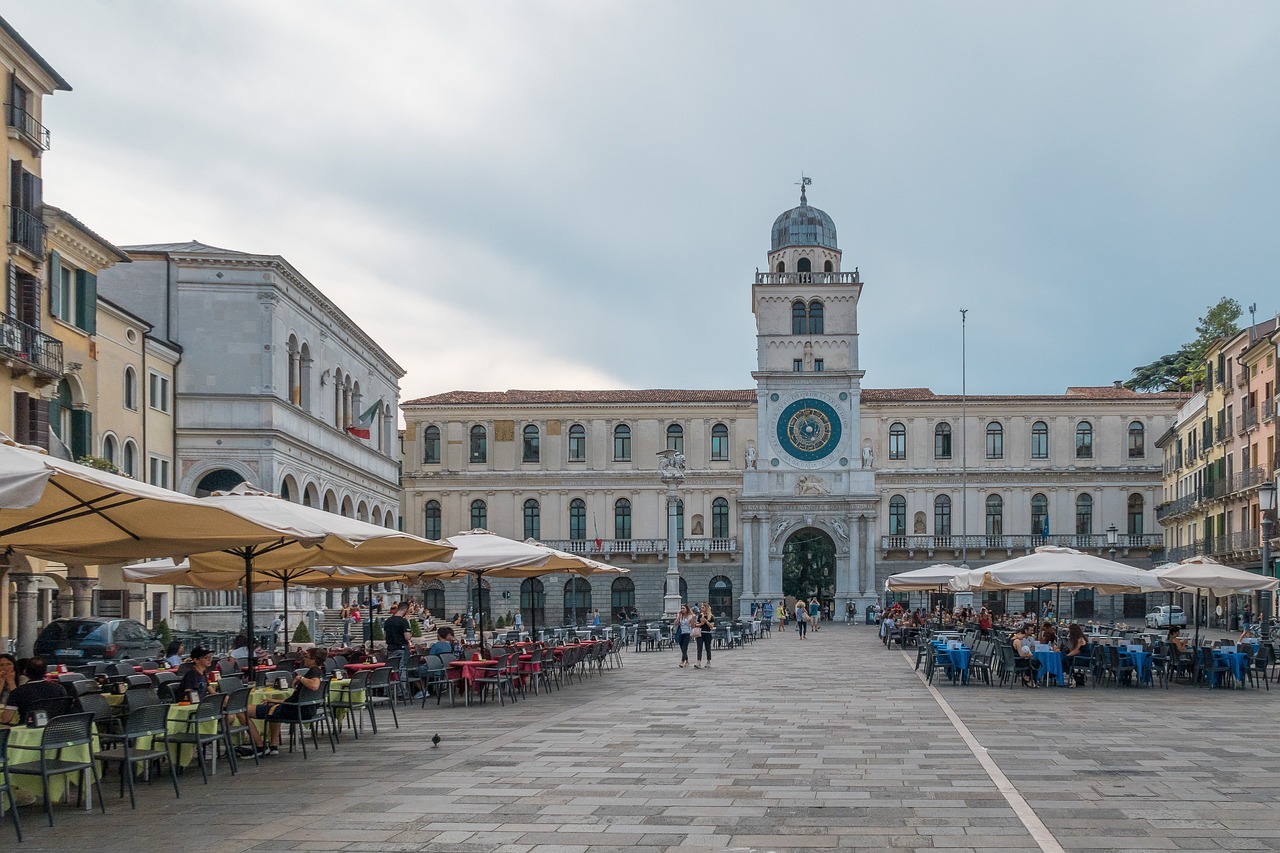
Padua sits roughly 35 kilometers west of Venice. By train, it’s approximately 20-25 minutes. By car, slightly longer depending on traffic. Either way, it’s one of the most accessible and most consistently rewarding day trips available from Venice.
Most visitors come to Padua for one reason: the Scrovegni Chapel. And they leave understanding why.
The Scrovegni Chapel — officially the Arena Chapel — contains a complete cycle of frescoes painted by Giotto di Bondone between 1304 and 1306. These frescoes represent one of the single most important moments in the history of Western art. Before Giotto, painting was largely flat, symbolic, and disconnected from human emotion. Giotto changed everything — introducing depth, naturalism, and genuine feeling into painted figures for the first time in centuries.
Walking into the Scrovegni Chapel and looking up is one of the most profound artistic experiences available anywhere in Europe. The entire interior is covered — walls, ceiling, every surface — with scenes from the life of the Virgin and the life of Christ. The figures move. They feel. They express grief, joy, anger, tenderness with a psychological depth that feels startlingly modern for work that is over 700 years old.
The chapel is small. Visits are timed and limited to groups of approximately 25 people for 25 minutes at a time. This constraint feels frustrating until you’re inside — and then it feels like the only appropriate way to experience art this significant. No crowds pushing you forward. No rushing. Simply standing in front of masterpieces and looking, properly, for the first time.
Beyond the chapel, Padua deserves more time than most visitors give it. The city holds Italy’s oldest university — founded in 1222, predating Oxford’s formal establishment. The university’s Palazzo Bo contains the world’s first permanent anatomical theater, built in 1594. Walking through its wooden tiers, understanding that surgeons and students gathered here centuries before modern medicine existed, provides historical context that connects directly to how knowledge was created and shared in Renaissance Italy.
Padua’s historic center is walkable, beautiful, and almost entirely free of international tourists. The cafés serve excellent coffee at standing-bar prices. The restaurants serve traditional Veneto cuisine — bigoli in duck ragù, lingua salmì, local cheeses — at prices that feel almost shocking after Venice dining costs.
A full day in Padua might include: morning chapel visit (book the timed entry well in advance — these sell out), late morning exploring the university and historic center, lunch at a traditional restaurant, and an afternoon visiting the Botanical Garden — one of Europe’s oldest university botanical gardens, now a UNESCO World Heritage site — before returning to Venice by evening train.
Before leaving Venice, don’t miss these cultural highlights with museum tickets — skip-the-line access to Venice’s major museums on your non-Padua days ensures you experience both the city and the region without sacrificing time to queues at either location.
Verona: Shakespeare, Romans, and a City That Actually Works
Verona sits roughly 75 kilometers west of Venice. By high-speed train, the journey takes approximately 55-65 minutes. By car, roughly the same depending on traffic. It’s the furthest of Venice’s major day trips — but also one of the most rewarding, because Verona is genuinely one of Italy’s best cities.
The Arena di Verona dominates the city center — a Roman amphitheater completed in the first century AD, still standing, still functioning. Not as a museum. As a working venue. Opera performances fill this 2,000-year-old structure every summer, with audiences numbering in the thousands watching world-class singers perform under open sky in a space that Romans built before the fall of the Empire.
Visiting the Arena during the day — walking through the ancient stone corridors, climbing to the upper tiers, looking out across a city that has existed continuously for over two millennia — provides historical perspective impossible to achieve in Venice. Venice is extraordinary, but it’s extraordinary in a very specific way — built on water, isolated, unique. Verona is extraordinary in a completely different way — ancient, layered, a city where Roman, medieval, Renaissance, and modern life accumulated over centuries into something remarkably cohesive.
Romeo and Juliet connects Verona to Shakespeare — and while the historical accuracy of the connection is debatable, the city embraces it enthusiastically. Juliet’s balcony (actually a museum dedicated to the play) draws visitors from around the world. The experience is undeniably touristy. But the Shakespeare connection also draws visitors into genuinely interesting parts of Verona — the Piazza delle Erbe, the medieval church of Sant’Anastasia, the narrow streets of the historic center — that deserve visiting regardless of literary associations.
Sant’Anastasia deserves particular attention. This Gothic church holds a stunning altarpiece by Pisanello — one of the finest examples of early Renaissance painting in northern Italy — alongside works by other significant artists. The church is free to enter. The painting stops visitors mid-stride. This is exactly the kind of discovery that makes Italian travel so consistently rewarding — extraordinary art hiding in plain sight, free to see, unknown to most visitors.
A full day in Verona might include: morning at the Arena and surrounding piazza, late morning exploring the historic center and Sant’Anastasia, lunch at a traditional restaurant (Verona’s cuisine centers on bollito misto, pastissada de caval, and risotto all’Amarone — dishes worth seeking out specifically), and an afternoon visiting Castelvecchio — the medieval fortress museum holding an impressive collection of Veronese art and medieval weapons — before returning to Venice by evening train.
The Prosecco Hills: Wine, Landscape, and UNESCO Heritage
The Prosecco Hills stretch between Conegliano and Valdobbiadene, roughly 40 kilometers north of Venice. By car, the region is approximately 45-60 minutes away. By train to Conegliano followed by local transport or taxi into the hills, slightly longer.
This landscape was designated UNESCO World Heritage in 2019 — not for historical monuments or ancient ruins, but for the vineyard landscape itself. The steep hillsides covered in geometric vine rows, the medieval villages perched on ridges, the family-owned wineries producing bottles that have become some of Italy’s most celebrated — all of this together represents a living cultural landscape shaped by centuries of human agricultural activity.
Prosecco the wine has become enormously popular internationally. But visiting the region where it’s actually produced reveals something the supermarket bottle never communicates: how dramatically the landscape, the grape varieties, and the winemaking traditions shape what ends up in the glass.
The hills around Valdobbiadene are steep enough that harvesting requires hand labor — no machine can navigate these slopes. Walking through these vineyards, understanding that every grape was picked by hand, changes how you taste the wine. The Cartizze zone near Valdobbiadene — tiny, incredibly steep, producing the most prestigious Prosecco designation — represents perhaps the most dramatic example. From ground level, it looks like scattered vineyards on impossibly vertical hillsides. Understanding why wine from this specific patch of land commands premium prices requires seeing the terrain firsthand.
Family-owned wineries welcome visitors throughout the region. Tastings happen in cellars beneath centuries-old farmhouses. The wines served aren’t the mass-produced Prosecco found in every supermarket — they’re estate wines, often from single vineyards, expressing the specific character of their hillside location. The difference in quality and complexity is immediately apparent to anyone paying attention.
Explore the Veneto region on day trips from Venice — private day trips provide the local knowledge that transforms a regional visit from generic tourism into genuine understanding. Knowing which wineries welcome visitors warmly, which roads offer the best views, where to eat traditional lunch, and how to navigate the hills without getting lost makes the Prosecco region accessible in ways independent travel sometimes doesn’t.
Traditional lunch in the Prosecco Hills is an experience worth planning around. Small restaurants and agriturismi (farm restaurants) serve dishes rooted in local agricultural traditions — radicchio from nearby Treviso, local cheeses, cured meats, simple pasta with seasonal ingredients. The setting matters as much as the food: a stone farmhouse surrounded by vineyards, a terrace overlooking hillside vine rows, the quiet of a landscape where tourism hasn’t yet overwhelmed the agricultural character.
A Prosecco Hills wine tour combines vineyard visits, winery tastings, and traditional lunch into a complete regional experience. This isn’t a generic wine tour — it’s an immersion in how a specific landscape produces a specific wine, guided by someone who understands both the agriculture and the culture behind it.
A full day in the Prosecco Hills might include: morning drive through the vineyard landscape, mid-morning winery visit and tasting, traditional lunch at a family restaurant or agriturismo, afternoon walking through vineyards or visiting a hilltop village, and a leisurely return to Venice as the afternoon light turns the hillside vine rows gold.
Bassano del Grappa: The Town Between the Mountains
Bassano del Grappa sits at the foot of the Dolomites, roughly 60 kilometers north of Venice and accessible in approximately 75 minutes by car. It’s less visited than Padua or Verona but holds genuine charm and a specific cultural significance worth understanding.
The town’s name reveals its identity immediately. Grappa — the fierce Italian brandy distilled from grape pomace — was essentially invented here. The Nardini distillery, founded in 1779, still operates in Bassano’s historic center and offers tastings that introduce visitors to a spirit most Americans have never encountered. Grappa’s reputation as harsh and industrial reflects mass-produced versions. Bassano’s artisanal producers create something entirely different — complex, aromatic, genuinely worth sipping slowly.
The Ponte degli Alpini — a wooden bridge spanning the Brenta River at the town’s heart — has been rebuilt multiple times throughout history, most recently after World War I destroyed the previous version. The bridge connects Bassano to the mountains rising behind it, creating a visual composition that painters have attempted to capture for centuries. Andrea Palladio designed an earlier version of this bridge — connecting Bassano’s architectural heritage to Venice’s greatest architect.
The town holds a small but well-curated museum dedicated to grappa production, local history, and the surrounding landscape. The historic center is compact, walkable, and entirely free of the tourist infrastructure that crowds Venice. Cafés here serve coffee at local prices. Restaurants serve traditional mountain cuisine — polenta, local cheeses, game dishes — that reflects the Dolomitic landscape rather than Venetian lagoon traditions.
Bassano works best as a half-day visit combined with either the Prosecco Hills (which sit between Venice and Bassano geographically) or a morning in the Dolomites’ lower valleys. The town itself doesn’t fill a full day, but its position at the mountain’s foot makes it a natural stopping point for visitors exploring the region beyond Venice’s immediate vicinity.
The Dolomites: A Different Kind of Day Trip
The Dolomites begin roughly 90 minutes north of Venice by car — close enough for ambitious day trips during summer months, though the driving demands attention and the return journey in fading light requires care.
A Dolomites day trip from Venice isn’t about reaching the highest peaks. That requires overnight stays and serious hiking commitment. What a day trip provides is access to the lower valleys and foothills — enough to understand why these mountains captivate visitors, enough to experience Alpine landscape fundamentally different from Venice’s lagoon environment, enough to justify the drive.
Lago di Misurina — a glacial lake at 1,756 meters elevation, roughly 100 kilometers north of Venice — represents an achievable and rewarding day-trip destination. The lake sits at the foot of the Tre Cime di Lavaredo — the three dramatic peaks that define the Dolomites’ most iconic silhouette. Driving around the lake, stopping at viewpoints, simply sitting and looking at pale limestone towers rising vertically from green Alpine meadows — this provides the essential Dolomitic experience without requiring serious mountaineering.
The contrast between Venice and the Dolomites is total. Venice is water, flatness, humidity, ancient civilization layered over centuries. The Dolomites are rock, altitude, clarity, geological drama on a scale that makes human history feel brief. Experiencing both within a single trip — even a single day — creates a sense of the Veneto region’s extraordinary geographic diversity.
Summer months (June-September) are essential for Dolomite day trips. Winter driving on mountain roads requires experience and appropriate vehicles. Spring and autumn weather is unpredictable. The summer window provides reliable conditions, clear skies, and accessible roads.
Planning Your Day Trips: Practical Considerations
Train versus car presents the primary logistical decision for each destination.
Padua and Verona are both easily accessible by train — frequent, reliable, affordable. No car needed. Simply purchase tickets at Venice’s Santa Lucia station or online in advance.
The Prosecco Hills, Bassano del Grappa, and the Dolomites require a car. Venice itself doesn’t permit private vehicles, but rental cars are available at Piazzale Roma and at Mestre. Picking up a rental in the morning, driving into the region, and returning it the following day provides maximum flexibility for destinations the train doesn’t reach efficiently.
Private guided day trips eliminate every logistical decision. Explore the Veneto region on day trips from Venice — a private guide provides the car, the route, the restaurant recommendations, the winery introductions, and the historical context that transforms a regional visit from generic tourism into genuine understanding. This matters particularly for the Prosecco Hills and Bassano, where knowing which specific wineries to visit and which roads to take makes the difference between an extraordinary day and a frustrating one.
How many day trips to take depends on your total Venice stay length. A three-night stay might include one day trip. Five nights comfortably accommodates two. Longer stays can combine multiple regional explorations with Venice days, creating a trip that feels genuinely Venetian rather than simply Venice-focused.
Plan Your Venifice Region Exploration
For cultural day trips: Padua and Verona both reward full days of exploration. Before leaving Venice, don’t miss these cultural highlights with museum tickets — skip-the-line access to Venice’s museums on your non-day-trip days ensures you experience both the city and the region without sacrificing time to queues at either location.
For regional exploration: Explore the Veneto region on day trips from Venice — private guided day trips provide local knowledge, transportation, and cultural context that independent travel often can’t match. Whether you’re visiting Padua’s chapel, Verona’s arena, or the Prosecco Hills, a knowledgeable guide transforms the experience from sightseeing into genuine understanding.
For wine and landscape: A Prosecco Hills wine tour combines vineyard visits, winery tastings, and traditional lunch into a complete regional experience. The combination of UNESCO landscape, family-owned wineries, and traditional cuisine creates one of the most satisfying day trips available from Venice.
For understanding Venice in context: Private tours throughout Venice can include regional connections — how Venice’s history connects to Padua’s university, how the Republic’s trade routes linked to Verona’s position, how the Prosecco Hills’ wine culture developed alongside Venice’s commercial empire. Understanding these connections makes both the city and the region more meaningful.
Discover What Exists Beyond Venice’s Lagoon — The Region Is as Extraordinary as the City
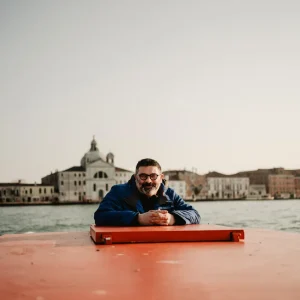
After 28 years exploring every corner of the Veneto and being featured by Rick Steves, NBC, and US Today, I know which destinations genuinely reward the time investment and which disappoint. Padua, Verona, and the Prosecco Hills consistently deliver experiences that visitors describe as trip highlights — sometimes surpassing Venice itself. Let me show you what’s worth visiting beyond the lagoon.
Book a private Veneto day trip or secure your Venice museum tickets for city days — experience the full extraordinary region, not just the island at its center.
Frequently Asked Questions
Which day trip should I prioritize if I can only take one?
It depends entirely on what interests you most. Art and history lovers should prioritize Padua — the Scrovegni Chapel alone justifies the trip, and nothing else in the region matches its significance. City lovers who want to experience a genuinely great Italian city should choose Verona — the Arena, the historic center, and the food all deliver. Wine and landscape enthusiasts should choose the Prosecco Hills — the UNESCO landscape, the family wineries, and the traditional lunch create an experience fundamentally different from anything Venice offers. All three are genuinely rewarding. Choosing based on your interests rather than generic “best” recommendations ensures you spend your day trip doing something that actually excites you.
Can I visit Padua and the Prosecco Hills in the same day?
Geographically, yes — Padua and the Prosecco Hills both sit west and northwest of Venice respectively, and a car route connecting them exists. Practically, doing both justice in a single day is extremely difficult. The Scrovegni Chapel visit alone requires advance booking and a timed entry. Spending meaningful time in the chapel, exploring Padua’s center, then driving to the Prosecco Hills for winery visits and lunch creates an exhausting day with neither destination receiving proper attention. Better to dedicate separate days to each — Padua as a train-based cultural day, the Prosecco Hills as a car-based wine and landscape day.
Do I need to speak Italian for these day trips?
Not for the major destinations. Padua and Verona both cater to international visitors, and English is widely understood at museums, restaurants, and tourist-facing businesses. The Prosecco Hills present slightly more of a language challenge — family wineries and traditional restaurants in rural areas may have limited English. But Italians are genuinely welcoming to visitors who show interest, and basic gestures of respect — greeting in Italian, showing enthusiasm for the wine or food — open doors that language barriers might otherwise close. A private guided day trip eliminates any language concern entirely, as your guide handles all communication with local wineries and restaurants on your behalf.