There are fewer than 20 gondola workshops left in Venice.
Twenty years ago there were more. Fifty years ago, more still. The number shrinks quietly, almost invisibly, as master craftsmen retire and fewer young apprentices choose to carry the tradition forward.
Walking past a squero — the Venetian word for gondola workshop — you might not realize what you’re seeing. A modest, open-air boatyard. Wooden hulls in various stages of completion. The smell of wood shavings and linseed oil. Men working with tools that look almost unchanged from centuries past.
This is one of Venice’s most important living traditions. Not a museum exhibit. Not a tourist performance. An actual functioning workshop where gondolas are still built by hand, one boat at a time, using techniques passed from master to apprentice for generations.
After 28 years walking Venice’s streets, I’ve watched these workshops quietly disappear. Each closure represents something irreplaceable — not just a business, but a chain of knowledge stretching back a thousand years. Understanding what happens inside these workshops changes how you see gondolas entirely.
Venice’s craftsmanship traditions extend far beyond gondolas — but few represent the city’s identity as completely as the art of building its most iconic boat.
What a Gondola Actually Is
Before understanding how gondolas are made, it helps to understand what they actually are — because most visitors have no idea.
A gondola is not simply a boat. It’s an engineering marvel disguised as elegance.
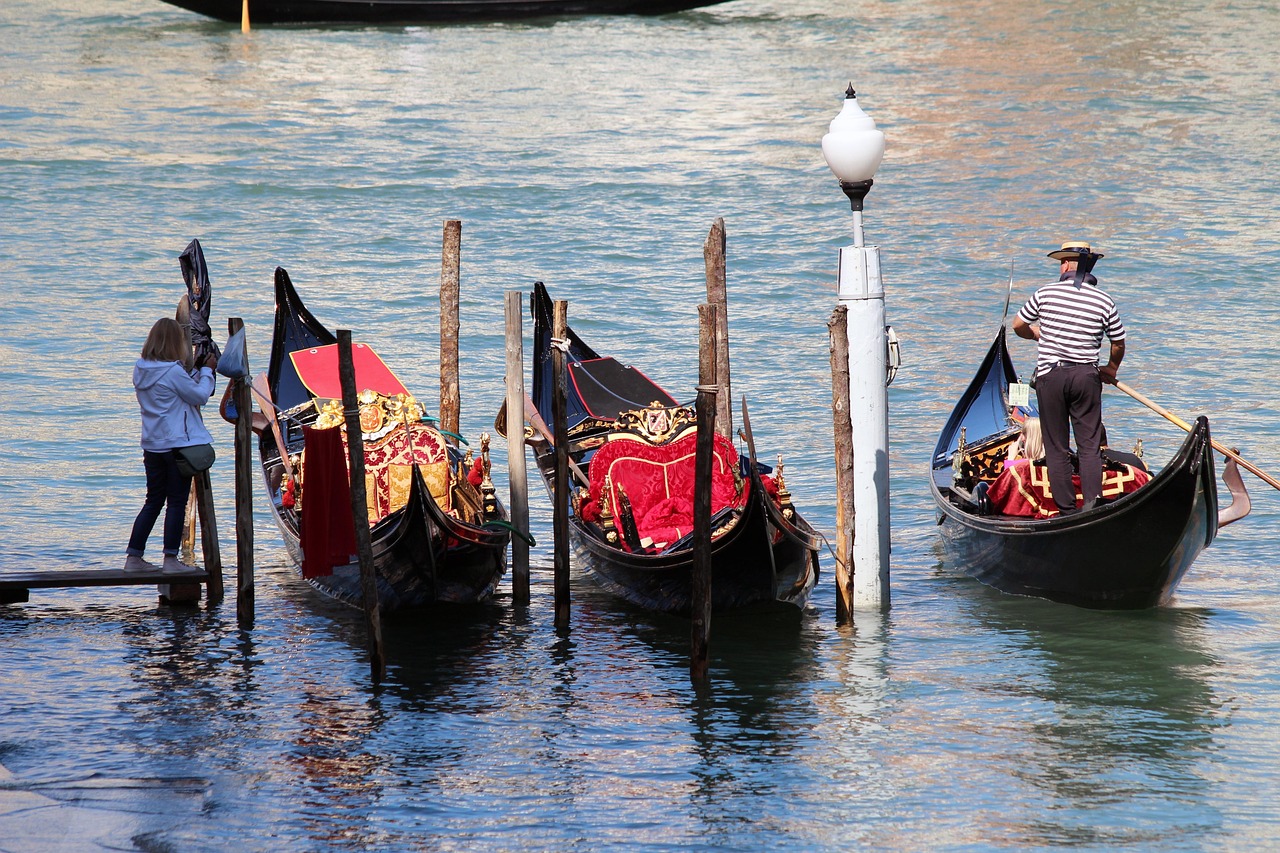
Each gondola is asymmetric. The left side is wider than the right. This isn’t a flaw or an accident — it’s a deliberate design feature that compensates for the gondolier’s single-oar rowing style. The asymmetry creates balance. Without it, the boat would constantly veer off course.
A gondola is also deliberately fragile-looking but structurally complex. The hull is constructed from nine different types of wood, each chosen for specific properties — flexibility, water resistance, strength, workability. Oak forms the ribs. Cherry provides the gunwales. Walnut, elm, larch, and others each play specific roles in the boat’s structure.
The finished gondola weighs around 500 kilograms and measures roughly 11 meters long. It’s narrow — just over one meter wide — because Venice’s canals demand it. The proportions are precise. Change any dimension significantly and the boat stops working as it should.
Understanding these specifics transforms a gondola from romantic symbol to extraordinary achievement. This is a boat that has been refined over centuries to perform perfectly in one of the world’s most unusual waterways.
The Apprenticeship: How Gondola Makers Learn
Becoming a gondola builder in Venice isn’t something you do quickly.
The traditional path begins with years of apprenticeship — typically five to seven years working alongside a master craftsman. During this time, the apprentice learns not just techniques but judgment. How wood behaves in different seasons. How humidity affects drying times. How to select timber that will last decades rather than years.
This knowledge cannot be learned from books. It comes from thousands of hours handling materials, making mistakes, watching a master correct those mistakes, and gradually developing the intuition that separates competent work from exceptional work.
The apprentice starts with simpler tasks — sanding, finishing, preparing materials. Gradually, responsibility increases. Shaping ribs. Fitting planking. Eventually, under supervision, the apprentice builds their first gondola. This moment carries real weight in Venetian craftsman culture. It represents years of preparation condensed into a single achievement.
Not every apprentice becomes a master. Some leave the trade for easier work. Others simply lack the patience or precision the craft demands. The ones who stay develop a relationship with their work that goes beyond employment — it becomes identity.
This is why losing a gondola workshop hurts Venice so deeply. When a master retires without a trained successor, an entire lineage of knowledge disappears. No one else carries exactly that understanding of wood, tools, and water.
Inside the Workshop: What You’d Actually See
If you could spend an afternoon in a working squero, here’s what would unfold before you.
The space itself is modest. An open courtyard, sometimes partially covered, with wooden frames and partially completed hulls arranged in various stages. Sawdust covers everything. Tools line the walls — planes, chisels, gauges, clamps, specialized instruments with no English names because they exist only in this tradition.
A master might be shaping a rib — bending oak into the precise curve that defines the gondola’s profile. This requires heating the wood, then clamping it into position and waiting. Patience isn’t optional here. Rush the process and the wood cracks or springs back to its original shape.
Elsewhere, planking is being fitted. Each plank must meet its neighbor perfectly — no gaps, no overlaps. Venice’s canals are unforgiving. Any weakness in the hull means water intrusion, which means the boat’s integrity slowly deteriorates. The craftsman tests each joint, adjusts, tests again.
The finishing stages involve painting — gondolas are traditionally black, though the shade and quality of paint matter enormously for longevity and appearance. Then the iron ferro is fitted at the bow. This distinctive ornament looks decorative, but it actually serves a functional purpose: it acts as a rudder guide and helps the gondolier navigate tight canal turns.
A single gondola takes several months to complete from raw timber to finished boat. Some masters work faster. Others prioritize perfection over speed. The best gondolas, built by the most skilled craftsmen, can last 30 years or more with proper maintenance. Others wear out faster depending on quality and care.
The Wood: Venice’s Most Critical Choice
Of everything that goes into building a gondola, wood selection might be the most consequential decision.
Venice’s waterways are brackish — a mix of fresh and salt water that attacks wood differently than either pure water alone. The wrong timber fails quickly. The right timber, properly selected and prepared, lasts decades.
Master craftsmen source their wood carefully. Oak must come from specific regions where growing conditions produce the right grain density. Cherry wood must be seasoned for years before use — rushed seasoning produces boats that warp. Each species is chosen not just for strength but for how it behaves in Venice’s specific water conditions.
Some master craftsmen maintain relationships with timber suppliers spanning generations. The supplier knows exactly what the craftsman needs. The craftsman knows exactly what the supplier can provide. This trust matters because bad wood wastes months of work and produces an inferior boat.
The drying process alone takes years for some species. Wood cut today might not be ready for use for three or four years. Master craftsmen maintain stockpiles — seasoned timber waiting for the right project, the right moment, the right fit.
This relationship between craftsman and material is one of the things that makes gondola building genuinely artisanal rather than industrial. No machine can select wood the way an experienced master can. No factory can replicate the judgment that comes from decades of working with timber in Venice’s unique conditions.
How Many Gondolas Exist — And Why It Matters
Venice currently has around 400 working gondolas and 400 licensed gondoliers.
These numbers are regulated. The city controls how many gondola licenses exist. When a gondolier retires, the license becomes available — but the waiting list is long, and entry into the profession requires passing demanding practical examinations.
The limited number of gondolas means limited demand for new boats. A gondola workshop survives only if enough gondoliers need new boats or extensive repairs to keep the craftsmen busy. When the number of active workshops shrinks, remaining craftsmen absorb more work — but the knowledge held by closed workshops disappears permanently.
This creates a quiet crisis that most visitors never notice. Venice’s gondola tradition depends on a delicate balance: enough demand to sustain craftsmen, enough craftsmen to maintain the tradition, enough apprentices to carry it forward. Disrupt any part of this chain and the whole system weakens.
Discover more Venetian craftsmanship at the Murano Glass Museum — another tradition where the number of master craftsmen shrinks each generation, raising the same questions about preservation and survival.
The Maritime Museum: Understanding Venice’s Boat-Building History
Venice didn’t just invent the gondola. Venice built an empire on boats.
For centuries, the city’s shipbuilding capacity was among the most sophisticated in the world. The Arsenal — Venice’s historic shipyard — once employed thousands of workers and could launch a fully equipped warship in a single day during peak production. The engineering knowledge developed there eventually influenced boat-building traditions across Europe.
The Maritime Museum showcases the history of Venetian boat building — from the Republic’s merchant galleys to the gondolas that remain Venice’s most recognizable vessel today. Understanding this broader history gives gondola workshops their proper context. The gondola isn’t an isolated tradition. It’s the surviving expression of a boat-building culture that once dominated the Mediterranean.
The museum’s collection traces how Venetian naval architecture evolved over centuries — how designs were refined through experience, how materials were selected and prepared, how knowledge was transmitted from master shipbuilder to apprentice. Many of the same principles that governed Republic-era warship construction still guide gondola makers today.
Visiting the Maritime Museum before or after seeing a gondola workshop transforms both experiences. The workshop shows where Venice’s boat-building tradition lives today. The museum shows where it came from.
The Gondolier’s Relationship With Their Boat
A gondola isn’t just a tool for a gondolier. It’s an extension of their body.
Professional gondoliers develop an intimate understanding of their specific boat — how it responds to weight shifts, how it moves in different canal conditions, how the current affects its handling at particular points in Venice. This knowledge takes years to develop and exists only for that specific boat.
When a gondolier’s boat wears out, replacing it isn’t simply buying a new one. The new gondola must be broken in — learning how it moves, adjusting rowing technique to match its specific characteristics. Some gondoliers describe this transition as uncomfortable for months.
This relationship explains why gondoliers care so deeply about the quality of their boats. A poorly built gondola doesn’t just look bad — it performs badly. It responds unpredictably. It makes the gondolier’s work harder and less safe.
The best gondola makers understand this relationship. They don’t just build boats. They build tools that become part of someone’s professional identity. This understanding elevates the craft beyond carpentry into something closer to instrument-making — creating precisely calibrated objects that must perform perfectly in demanding conditions.
Visiting Gondola Workshops: What’s Possible
Some gondola workshops welcome visitors. Others don’t. The landscape changes constantly as craftsmen retire or change their policies.
The most productive approach is visiting during working hours and simply observing. Don’t interrupt craftsmen mid-task. Don’t demand explanations while they’re focused on delicate work. Watch. Notice what’s happening. If a craftsman pauses naturally, a respectful question — asked in Italian if possible — often opens conversation.
Photography is usually welcome but always ask first. Photographing work in progress documents a tradition that may not exist in its current form for much longer.
For a more structured experience, private guided workshop visits can be arranged through knowledgeable local guides who maintain relationships with specific craftsmen. These visits include proper introductions, explanations of techniques, and time to ask questions without interrupting ongoing work.
Experience authentic craftsmanship on Venice hands-on workshop tours — these include visits to working artisan spaces where you can watch traditional techniques in practice and sometimes participate in hands-on activities. The gondola workshop experience fits within a broader appreciation of Venice’s surviving craft traditions.
Understanding what you’re seeing — the centuries of knowledge embedded in every joint, every curve, every piece of wood — transforms a casual workshop visit into something genuinely meaningful.
Why This Tradition Matters Beyond Venice
Gondola workshops aren’t just a Venetian curiosity. They represent something larger about how knowledge survives.
Industrial manufacturing solved most boat-building needs decades ago. Fiberglass, aluminum, factory production — these approaches produce boats faster, cheaper, and in greater quantities than any traditional workshop could match.
But they can’t produce a gondola. Not because the technology doesn’t exist to mass-produce wooden boats, but because a gondola isn’t simply a wooden boat. It’s a thousand years of accumulated knowledge about wood, water, balance, and beauty — knowledge that exists only in the hands and minds of the craftsmen who carry it.
When the last gondola workshop closes — and the math suggests this will eventually happen — Venice loses more than a manufacturing capability. It loses a way of understanding wood, water, and craftsmanship that no factory can replicate or archive.
This is why watching these workshops matters. Not as tourism. Not as nostalgia. But as witnessing something that exists now and may not exist in a generation.
Venice’s survival as a functioning city depends on preserving traditions like this — not as museum exhibits, but as living practices that connect the city to its identity.
Plan Your Gondola Workshop Experience
For Venetian craftsmanship beyond gondolas: Discover more Venetian craftsmanship at the Murano Glass Museum — glass-blowing is another tradition where master craftsmen become rarer each generation, and where watching skilled artisans work reveals centuries of accumulated knowledge.
For Venice’s broader boat-building heritage: The Maritime Museum showcases the history of Venetian boat building — understanding where gondolas fit within Venice’s larger naval history gives the workshop experience proper context and depth.
For hands-on craft experiences: Experience authentic craftsmanship on Venice hands-on workshop tours — these provide structured visits to working artisan spaces, including introductions to craftsmen and opportunities to participate in traditional techniques.
For deeper Venice understanding: A private tour with a licensed guide can locate working workshops, explain what you’re seeing, and provide context that transforms a casual walk past a boatyard into genuine cultural understanding.
Witness a Tradition That Won’t Last Forever — While It Still Exists
After 28 years walking Venice’s streets and being featured by Rick Steves, NBC, and US Today, I know which traditions are quietly disappearing. Gondola workshops are among the most important — and the most fragile. Let me show you where they still exist and what’s happening inside them.
Book a private Venice craft tour or secure skip-the-line access to Venice’s craft museums — understand the traditions that made Venice what it is, before they disappear entirely.
Frequently Asked Questions
Can I actually visit a working gondola workshop?
Some workshops welcome visitors during working hours, though policies vary and change. The best approach is arriving respectfully during active work periods and observing without interrupting. If a craftsman pauses naturally, a polite question — ideally in Italian — often opens conversation. For a more structured experience, arranging a visit through a knowledgeable local guide ensures proper introductions and meaningful time with the craftsmen. These visits are worth planning in advance rather than hoping to stumble upon an open workshop.
How long does it take to build one gondola?
A single gondola takes several months from raw timber to finished boat, depending on the craftsman’s pace and the complexity of the commission. Some masters work faster, prioritizing efficiency. Others take longer, prioritizing perfection. The wood itself requires years of seasoning before it’s even ready to work — so the true timeline from timber selection to finished boat stretches much longer than the workshop phase alone suggests.
Are gondola workshops disappearing?
Yes, quietly and steadily. Fewer than 20 remain in Venice today, and the number continues to shrink as master craftsmen retire. The survival of each workshop depends on finding apprentices willing to commit years to learning a demanding trade, and on sufficient demand from Venice’s roughly 400 licensed gondoliers for new boats and repairs. Both conditions become harder to maintain each decade. Visiting these workshops now carries a significance beyond tourism — you’re witnessing a tradition in its final generations.