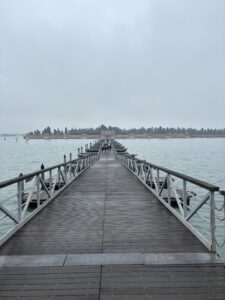
Venice looks like a city designed for postcards, not logistics.
And yet, every single day, thousands of residents go to work, take children to school, do groceries, visit doctors, meet friends, and live normal lives — all without cars, bikes, or wide streets.
To understand Venice, you have to understand how Venetians move.
Not how tourists move between landmarks, but how locals actually navigate the city when no one is watching. This is one of the biggest differences between visiting Venice and understanding it.
Walking Is the Real Transportation System of Venice
For Venetians, walking is not an activity. It is infrastructure.
Most daily movements happen on foot, across bridges and through calli that visitors often rush through without noticing.
Distances in Venice are shorter than they look on a map, but longer than they feel in photos. A 15-minute walk can cross entire neighborhoods, pass multiple churches, and completely change atmosphere.
Locals know which bridges save time, which streets flood first during high water, and which routes stay quiet even during peak hours.
This is why visitors who start their stay with a Venice orientation walk with a local guide often feel instantly more confident moving around the city on their own.
👉 Want to stop feeling lost on day one?
The Vaporetto: Public Transport, Not a Cruise
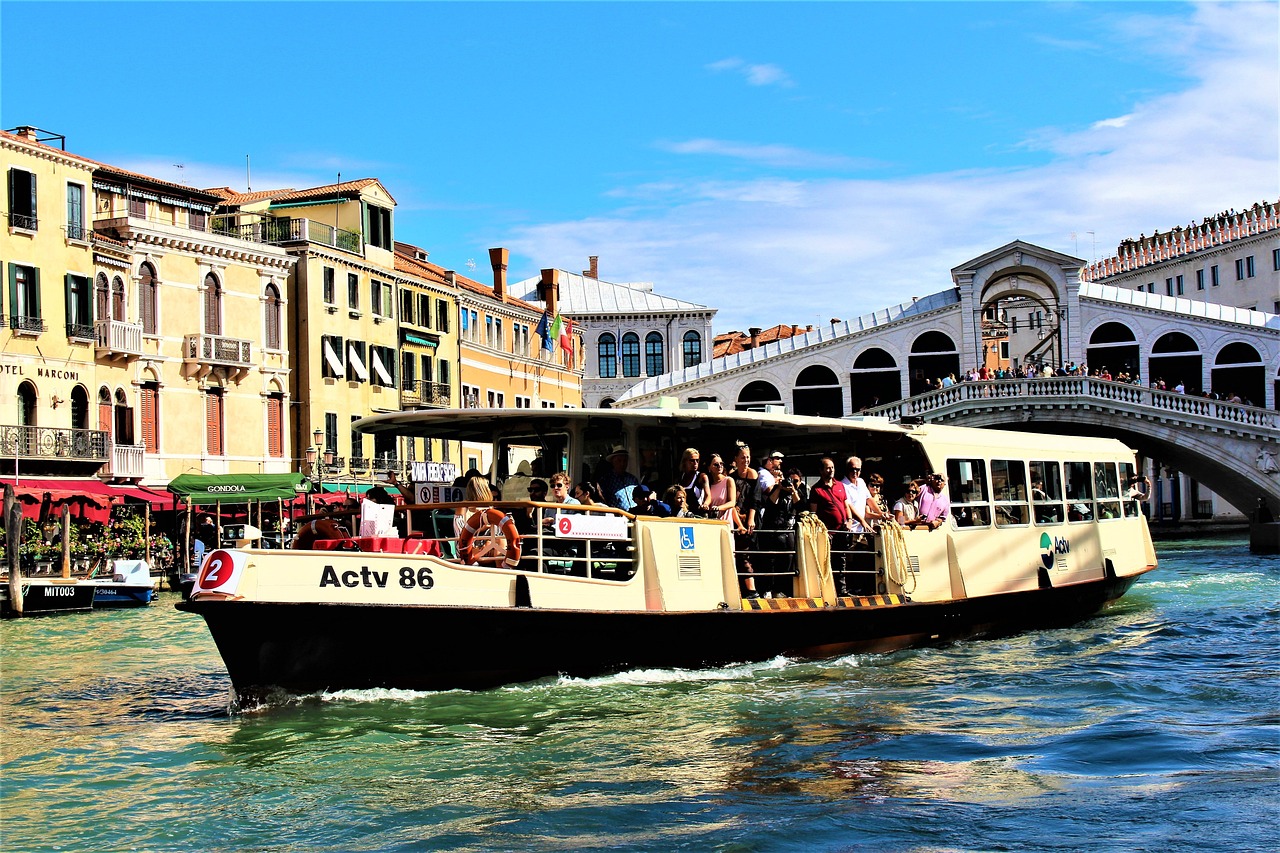
The vaporetto is Venice’s public transportation system, not a sightseeing ride.
Locals use it selectively. Very selectively.
For Venetians, the vaporetto is practical for:
- Long distances across the Grand Canal
- Commuting to outer districts
- Reaching islands such as Murano, Burano, or Giudecca
It is not used for short hops that are faster on foot.
Tourists often overcrowd certain lines simply because they look scenic, while locals quietly use less obvious routes or different times of day.
If you plan to use public transport frequently, reserving a vaporetto pass can simplify logistics and reduce stress.
Water Taxis: When Venetians Actually Use Them
Despite appearances, water taxis are not everyday transport for most Venetians.
They are used strategically.
Locals typically take water taxis when:
- Moving heavy luggage
- Traveling with elderly family members
- Arriving late at night
- Needing direct point-to-point transport
Water taxis are expensive, but efficient. They are about precision, not luxury.
Visitors often associate them with glamour, while Venetians associate them with practicality.
For arrivals or departures, many travelers choose a private water taxi transfer to avoid navigating crowded public transport after a long journey.
What Venetians Never Do
Understanding local movement also means knowing what Venetians avoid.
Venetians do not:
- Take the vaporetto for one stop
- Cross the Grand Canal unnecessarily
- Walk the same tourist corridor twice in one day
- Move at peak hours unless unavoidable
Instead, they adapt routes, schedules, and habits constantly.
Venice teaches efficiency through observation.
The Secret Weapon: Timing, Not Speed
Venetians don’t rush.
They move at the right time.
A 10-minute walk at 8:00 am can replace a 30-minute journey at noon. A vaporetto ride at the wrong hour can double in length without moving any faster.
This sensitivity to timing is something visitors rarely consider — until someone explains it.
It’s also why guided experiences focused on rhythm rather than distance feel effortless instead of exhausting.
How Visitors Can Move Smarter in Venice
You don’t need to live in Venice to move like a Venetian.
You simply need context.
Small adjustments make a big difference:
- Walk more than you think you should
- Use vaporetti only for longer crossings
- Plan major moves early or late in the day
- Pre-book tickets to avoid unnecessary backtracking
Moving well in Venice is not about speed. It’s about flow.
Why Understanding Movement Changes Everything
Once you understand how Venetians move, Venice stops feeling chaotic.
Distances make sense. Crowds feel manageable. The city becomes readable.
This shift often marks the moment when visitors stop feeling like outsiders and start feeling oriented.
Experience Venice at the Right Pace
Venice rewards those who move thoughtfully.
Learning how the city works — from bridges to boats — transforms the entire experience and removes unnecessary friction.
Explore Venice at a Local Pace
Frequently Asked Questions
Do Venetians use the vaporetto every day?
Some do, especially those living farther from the historic center, but many Venetians rely primarily on walking and use vaporetti only when distances justify it.
Is walking really the fastest way to get around Venice?
Often yes. For many routes within the historic center, walking is faster and more reliable than public transport.
Are water taxis only for tourists?
No. Venetians use water taxis for specific needs such as luggage, night travel, or direct point-to-point transport, even though they are not part of daily commuting.