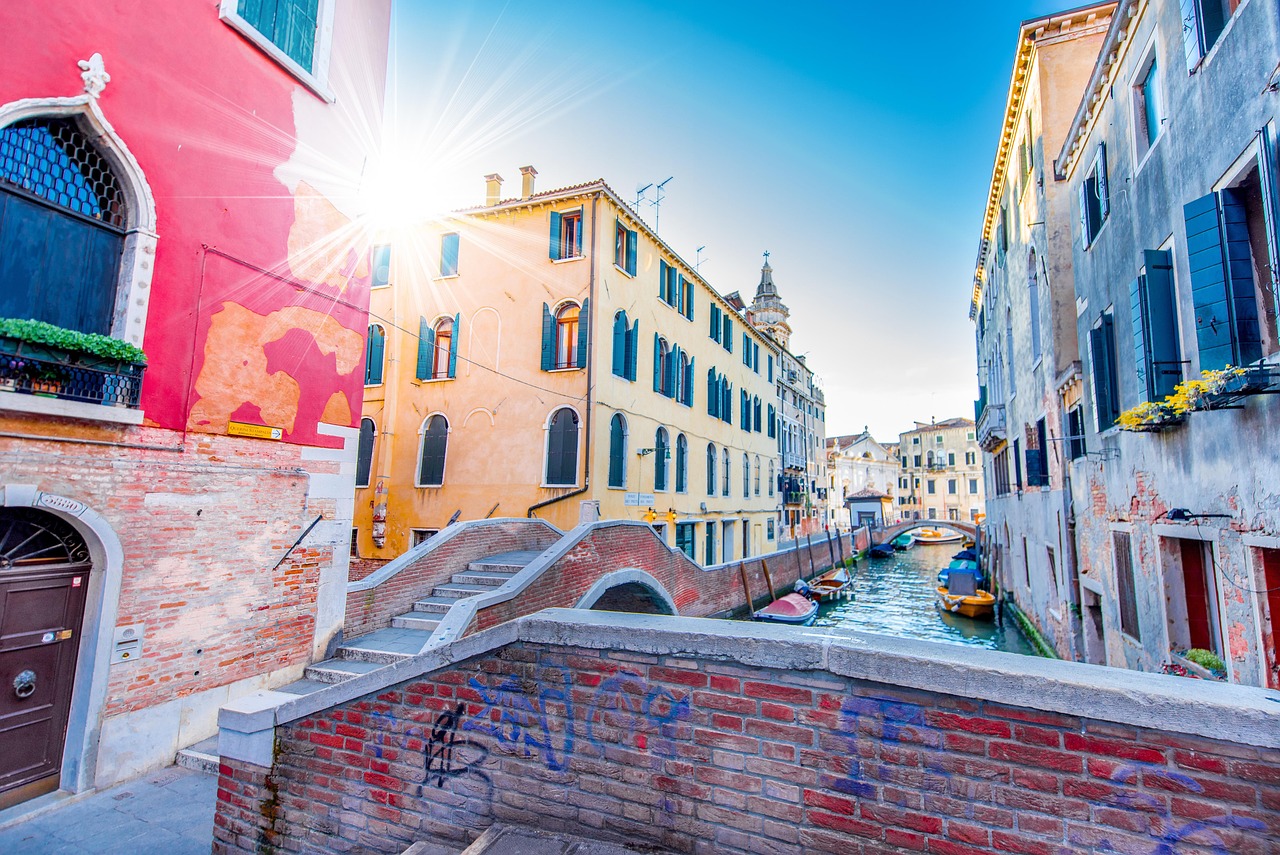
Every visitor wonders the same thing eventually.
Usually after two or three days walking through crowds, photographing landmarks, eating tourist-facing meals. The question surfaces quietly: How do actual Venetians live here?
The city seems designed entirely for visitors. Souvenir shops line every major street. Restaurants display menus in six languages. The vaporetti are packed with tourists carrying luggage and cameras. Where are the grocery stores? Where do children go to school? How does anyone afford to live in the most expensive city in Italy?
The truth is that Venetians do live here — roughly 50,000 of them, down from 175,000 in the 1950s. They navigate the same narrow streets visitors photograph. They shop at markets tourists walk past without noticing. They send their children to schools hidden in buildings that look residential from outside. They’ve developed rhythms, strategies, and solutions to problems that visitors experience as charming inconveniences but which residents must solve daily.
After 28 years living in Venice, I know exactly how the city functions when you’re not performing tourism. The morning routines. The shopping strategies. The social networks that make island living practical. The compromises required. The moments of genuine beauty that never appear in guidebooks because they’re too ordinary to photograph.
This is Venice without performance. The city as actual residents experience it — neither romantic postcard nor dystopian tourist trap, but simply a place where people live complicated, ordinary lives in genuinely extraordinary circumstances.
Morning: How the Day Actually Starts
A Venetian morning begins quietly, usually between 6:00 and 7:00 AM.
The vaporetto fills with commuters. Workers traveling from residential neighborhoods toward jobs in San Marco or the Rialto. Students heading to university. Delivery workers transporting goods. The morning vaporetto crowd is almost entirely local — you can tell by the lack of cameras, the newspapers being read, the conversations in Venetian dialect rather than Italian or English.
Venetians stand on vaporetti differently than tourists. They position themselves near exits, anticipating their stop. They don’t crowd the windows. They check phones, read, talk quietly. The ride is transportation, not sightseeing. This subtle difference in body language and attention reveals who belongs and who’s visiting more clearly than any other indicator.
Breakfast happens at neighborhood bars — not tourist cafés with outdoor seating and elaborate menus, but simple working-class bars where locals drink espresso standing at the counter. A cornetto accompanies the coffee. Maybe a small pastry. The interaction is brief — order, drink, pay, leave. Total time: five minutes maximum.
The cost is significantly lower than tourist café prices. A cornetto and espresso at a neighborhood bar costs roughly what a single coffee costs at a San Marco café. Venetians know exactly which bars serve their neighborhoods and patronize them loyally. Changing bars means changing social networks — these spaces function as much as community gathering points as commercial establishments.
Children head to school through the same narrow streets tourists navigate. Venice has elementary schools, middle schools, a high school — all functioning within the historic center. School buildings look residential from outside. Only the morning arrival of dozens of children with backpacks reveals their purpose.
Venetian children navigate the city with remarkable independence from young ages. By age 8 or 10, many walk to school alone or with friends. The city’s small size, the absence of car traffic, and the tight social networks within neighborhoods create conditions where this feels safe. Parents don’t drive children to school — there are no cars. Children simply walk, often meeting friends at predetermined campos along the route.
Shopping: How Venetians Actually Buy Food
Venice has no supermarkets in the historic center. This single fact shapes daily life more than visitors realize.
The Rialto Market serves as Venice’s primary fresh food source. Every morning except Sunday and Monday, local vendors sell fish from the Adriatic and lagoon, vegetables from the mainland, and other fresh ingredients. Venetians arrive early — before 8:00 AM if possible — when selection is best and crowds are minimal.
The Rialto Market before sunrise reveals Venice at its most functional — wholesale buyers selecting fish, vendors arranging produce, the city’s food supply chain operating at full efficiency. This isn’t performance or tourism. It’s how Venice feeds itself, unchanged in fundamental ways for centuries.
Shopping happens almost daily. Without supermarkets or large refrigerators (Venetian apartments are typically small, with compact kitchens), buying groceries for an entire week isn’t practical. Venetians shop frequently — stopping at the Rialto for fresh fish or vegetables, visiting neighborhood bakeries for bread, picking up specific items at small shops scattered throughout residential areas.
This pattern creates a rhythm completely different from mainland Italian life or American suburban life. Shopping isn’t a weekly expedition to a large store. It’s a daily interaction with vendors you know personally, in markets and shops you visit multiple times per week. The social component matters as much as the transaction — these interactions maintain community connections that isolation and tourism pressure constantly threaten.
Small neighborhood shops supplement the Rialto Market. A butcher in Cannaregio. A cheese shop in Castello. A produce vendor in Dorsoduro. These businesses survive by serving local residents, not tourists. Their prices are reasonable. Their quality is high. Their locations are deliberately away from tourist traffic.
Finding these shops requires either living in Venice or being shown them by someone who does. They don’t advertise to tourists. They often lack English-speaking staff. But they’re essential infrastructure for residents who need to buy actual groceries at non-tourist prices.
Supermarkets exist on the mainland in Mestre and along the causeway. Some Venetians make weekly trips to these stores, buying non-perishables in bulk and transporting them back by car (parked at Piazzale Roma) or by bringing wheeled shopping carts on the vaporetto. This hybrid approach — daily fresh shopping at the Rialto, weekly staples shopping on the mainland — represents how many Venetians actually manage household food needs.
Work: What Venetians Do for a Living
Tourism dominates Venice’s economy so completely that visitors assume every Venetian works in hospitality. The reality is more complex.
Many Venetians do work in tourism — hotel staff, restaurant workers, tour guides, museum employees, souvenir shop owners. The industry employs thousands and generates the bulk of Venice’s economic activity. But this work is often seasonal, relatively low-paying, and subject to the same pressures that drive residents away from the city.
Venice also holds significant white-collar employment that tourists never see. Banks, insurance companies, law firms, architectural practices, design studios — all operate within the city, employing professionals in campos and buildings that look residential from outside. Ca’ Foscari University employs hundreds of staff and attracts thousands of students, creating an academic economy that exists parallel to tourism but remains largely invisible to visitors.
Commuting outward is common. Many people who identify as Venetian actually work on the mainland — in Mestre, Padua, or elsewhere in the Veneto region — and return to Venice in evenings. The train connection makes this practical for some professions, though the daily commute gradually wears on people who eventually move entirely to the mainland for proximity to work.
The gondoliers represent Venice’s most visible working-class profession. Roughly 400 licensed gondoliers operate in Venice, earning income that varies dramatically by season. Summer brings constant work. Winter brings sporadic rides. The profession is passed through families in some cases — father to son, uncle to nephew — creating lineages that stretch back generations. But recruiting new gondoliers has become increasingly difficult as younger Venetians choose mainland careers with more stable income.
Artisan crafts — mask-making, glass-blowing, gondola construction, traditional bookbinding — still exist but in diminishing numbers. These professions require years of apprenticeship and produce goods that command prices only tourists or wealthy collectors will pay. As master craftsmen retire, many workshops close permanently because no apprentices learned the skills. Venice loses these traditions slowly, one retirement at a time.
Venice’s traditional gondola workshops are disappearing — fewer than 20 remain, and each represents centuries of accumulated knowledge. The craftsmen who maintain these workshops are among Venice’s last links to manufacturing traditions that once defined the city’s economy.
Midday: Lunch and the Venetian Pause
Lunch remains important in Venice, though changing work patterns have eroded the traditional Italian long midday break.
Workers in hospitality rarely get extended lunch breaks — restaurants serve tourists throughout the day, hotels operate continuously, shops stay open. But office workers, university staff, and some professionals still take proper lunch hours between 12:30 and 2:30 PM.
Venetians eat lunch differently than tourists. A sandwich from a neighborhood bakery eaten quickly at a bar standing up. A simple pasta dish at a workers’ restaurant where locals outnumber visitors twenty to one. Lunch at home if the work location allows — many Venetians living and working in the same neighborhood can return home midday.
The restaurants serving tourists — elaborate menus, waterfront seating, multilingual staff — are not where Venetians eat. Local restaurants exist in residential neighborhoods, serve limited menus featuring whatever’s fresh that day, and operate on schedules that assume local clientele. Lunch might be served only from 12:00 to 2:00 PM. Arrive at 2:15 and the kitchen is closed, regardless of how much you’d like to eat.
The midday pause creates brief windows when tourist-heavy areas empty slightly. Locals who’ve been working since early morning take breaks. Shops close for an hour or two. The city’s rhythm slows perceptibly. This pause is one of the last remaining elements of traditional Italian daily rhythm that mass tourism hasn’t entirely erased.
Afternoon: When Work and Life Overlap
Venetian afternoons blend work, errands, and social life in ways that modern life elsewhere has mostly abandoned.
Running errands means walking. Everything in Venice requires walking — no driving to appointments, no parking to find, no traffic to navigate. This creates both advantage and constraint. Errands take longer because walking takes longer. But the walking itself provides constant social interaction — encountering neighbors in campos, chatting with shopkeepers, seeing familiar faces throughout the day.
Children finish school around 1:00 or 4:00 PM depending on grade level and whether they attend full-day programs. Afternoons bring children to campos throughout the city — playing, socializing, moving through neighborhoods with the kind of independence American children rarely experience. Venice’s car-free environment makes this freedom possible. Parents know their children can navigate the city safely, limited only by canal boundaries and the inherent difficulty of getting genuinely lost in a city this small.
Social networks are intensely local. Venetians develop connections within their neighborhoods — their sestiere or even their specific few streets. These networks provide the social infrastructure that makes island living tolerable despite its inconveniences. Neighbors help carry heavy shopping up stairs (Venetian buildings rarely have elevators). Friends share information about which shops have the best prices. Community connections compensate for the isolation that tourism and declining population constantly threaten.
Older residents spend afternoons in campos — sitting on benches, chatting with neighbors they’ve known for decades, watching the city move around them. For elderly Venetians who’ve lived in the same neighborhood their entire lives, these afternoon hours represent one of the few remaining consistencies in a city that has changed almost beyond recognition.
Managing Without Cars: How Everything Gets Transported
Venice’s car-free existence is charming to visitors and genuinely complicated for residents.
Everything that enters Venice arrives by boat. Furniture, construction materials, groceries for restaurants, garbage collection, ambulance services — all happen on water. This creates logistical challenges that mainland cities never face and costs that residents ultimately pay through higher prices for everything.
Delivery workers navigate the city constantly. You see them everywhere — wheeling hand trucks through narrow calli, pushing carts piled high with goods, maneuvering through tourist crowds. These workers know which bridges have ramps, which routes avoid stairs, and which times of day allow moving efficiently before crowds arrive.
Hand carts are essential Venice technology. Every resident owns at least one — a wheeled cart for transporting shopping, moving anything heavy, bringing purchases from Piazzale Roma into the city. These carts are so ubiquitous that visitors barely notice them. But they’re what makes Venice livable without cars. Buying a washing machine means wheeling it from the vaporetto stop to your apartment, up stairs, through narrow doors. The hand cart makes this possible.
Staircases are Venice’s primary accessibility barrier. Venetian buildings were designed in centuries when elevators didn’t exist. Most residential buildings lack them still. This means anyone living above ground floor navigates stairs daily — often steep, narrow, stone stairs that become genuinely challenging when carrying heavy loads or dealing with mobility limitations.
Elderly residents sometimes become prisoners in their own apartments — physically unable to navigate stairs multiple times daily. Moving to ground-floor apartments is possible but expensive. Moving to the mainland becomes the practical solution for many elderly Venetians, contributing to the city’s demographic crisis.
Evening: When Venice Becomes Residential Again
Venice transforms after the day-trip tourists depart.
Around 6:00 or 7:00 PM, the tourist presence drops noticeably. Cruise ship passengers have departed. Day-trippers from Padua or Verona have caught their trains. The city’s population shifts from overwhelmingly tourist to more balanced between visitors and residents.
Locals emerge for evening routines. The passeggiata — the Italian tradition of evening strolling — happens in campos throughout residential neighborhoods. Families walk. Couples chat over Aperol spritz at neighborhood bars. Friends gather in small groups, speaking Venetian dialect and catching up on neighborhood news.
This social ritual is essential to Venice’s residential fabric. It’s where community happens. Where isolation is prevented. Where the city still functions as something other than a tourist destination.
Dinner at home is typical for most Venetian families. Cooking from the day’s market purchases — fresh fish, seasonal vegetables, simple preparations that let ingredients speak. Venetian home cooking differs significantly from restaurant food — simpler, less elaborate, focused on quality ingredients rather than complex preparations.
Venice’s food traditions center on seasonal availability and lagoon resources — the dishes Venetians cook at home reflect what’s actually available at the Rialto on any given day rather than the tourist-facing menus featuring the same items year-round.
Restaurants serving locals operate on different schedules and in different neighborhoods than tourist restaurants. They open for dinner around 7:00 or 7:30 PM, not 5:00 PM. They serve fixed menus based on the day’s best ingredients rather than extensive lists accommodating every preference. They close one or two days per week, something tourist restaurants never do. Finding these restaurants requires local knowledge or willing aimlessness — they’re in Castello, Cannaregio, Dorsoduro, away from San Marco and the Rialto’s tourist density.
Night: When the City Belongs to Residents
Venice at night is a completely different city than Venice during the day.
After 10:00 PM, the tourist presence drops to near zero. Hotel guests remain, but they’re typically inside or eating dinner. The streets empty. The campos quiet. The only sounds are water against stone and footsteps echoing through narrow passages.
This is when Venetians reclaim their city. Walking home from dinner. Stepping outside for a late coffee. Simply enjoying their neighborhoods without navigating tourist crowds. The contrast between night and day is total. The same streets that were impassable at noon become peaceful and entirely walkable at midnight.
Venice is genuinely safe at night — one of Europe’s safest cities by any measure. Violent crime is almost nonexistent. The tight social networks within neighborhoods create natural surveillance. Everyone knows who belongs and who doesn’t. This security allows the nighttime freedom that makes Venice livable despite its daytime challenges.
Young Venetians — the small population that remains — gather at specific campos in the evenings. Campo Santa Margherita in Dorsoduro. Campo San Giacomo dell’Orio in San Polo. These spaces become social hubs where the city’s younger generation maintains community despite tourism pressure and economic forces driving them away.
The challenge is that this population shrinks every year. Young Venetians leave for university on the mainland and never return. The jobs aren’t here. The apartments are too expensive. The daily inconveniences — no supermarkets, no cars, everything requiring boats or walking — feel charming at 20 but exhausting at 30 when building careers and families.
The Challenges: What Makes Venice Difficult
Living in Venice isn’t romantic. It’s complicated, expensive, and increasingly impractical for ordinary middle-class families.
Housing costs are among Italy’s highest. A modest two-bedroom apartment in a residential neighborhood costs what a much larger apartment in Mestre or Padua would cost. Venice real estate is bought by wealthy Italians as second homes, by foreign investors converting apartments to vacation rentals, by the small population of wealthy Venetians who can afford to stay. Ordinary workers — teachers, nurses, service industry employees — can’t compete.
This housing crisis drives the population decline. Families leave when children arrive because Venice apartments are too small and too expensive. Young professionals leave because the career opportunities don’t justify the cost of living. The city’s residential fabric deteriorates as each family departs.
Basic services are more expensive and less convenient. Healthcare requires traveling to the mainland for anything beyond basic care. Large purchases require transporting goods by boat and hand cart. Home maintenance costs more because materials must be transported by water and carried through the city. Everything that’s simple on the mainland becomes complicated in Venice.
Flooding — acqua alta — disrupts life regularly during autumn and winter. Water enters ground-floor apartments. Transportation becomes difficult when platforms are underwater. The MOSE flood barriers, completed after decades of delays and controversy, now prevent the worst flooding. But high water still affects daily routines, requiring residents to plan around forecasts and accept periodic disruption as part of Venetian life.
The tourist presence wears on residents constantly. Walking through crowds to reach home. Finding your neighborhood café converted to a tourist restaurant. Watching souvenir shops replace grocery stores. Venice’s identity as a living city erodes gradually but measurably, one conversion at a time.
Why Venetians Stay
Despite everything, roughly 50,000 people still call Venice home.
They stay because Venice is beautiful in ways nowhere else on earth is beautiful. Waking to fog over canals. Evening light on palace facades. The complete absence of car noise. The sensation of living in a place where every stone has centuries of history embedded in it. These daily experiences have genuine value that housing costs and logistical inconveniences don’t erase.
They stay because community matters. The neighborhoods function as villages — everyone knows everyone, helps each other, maintains social bonds that modern mainland cities have mostly lost. This social fabric compensates for many practical inconveniences. When neighbors become friends and streets become extended living rooms, the lack of cars and supermarkets feels less like deprivation and more like a different kind of richness.
They stay because Venice is home. For Venetians whose families have lived here for generations, leaving means abandoning identity. Venice isn’t simply where they live — it’s who they are. The decision to stay isn’t purely rational. It’s emotional, cultural, tied to history and belonging in ways that cost-benefit analysis can’t capture.
They stay because someone has to. If every remaining Venetian leaves, the city becomes entirely a tourist attraction — a beautifully preserved corpse with no beating heart. The residents who remain understand that their presence keeps Venice alive in the only way that actually matters — as a place where people live real lives, not as a theme park where visitors perform tourism.
Venice’s survival as a living city depends on understanding it beyond the tourist checklist — and on visitors recognizing that the neighborhoods they walk through, the campos they photograph, the streets they find charming are someone’s actual home, lived in daily under circumstances that photos never communicate.
How Visitors Can Support Residential Venice
Tourism created Venice’s current crisis. But tourism approached differently can support the city’s survival.
Shop at neighborhood businesses, not souvenir shops. Buy bread at a local bakery. Buy cheese at a shop serving residents. Your euros support businesses that serve Venetians rather than businesses that replace them.
Eat at restaurants where locals eat. If the menu is in six languages and the clientele is entirely tourists, you’re supporting the businesses driving residents away. Find restaurants in Cannaregio, Castello, or Dorsoduro where the menu is simple, in Italian only, and half the tables are filled with Venetians. Your meal supports businesses that feed the residential community.
Respect residential neighborhoods. Venice is someone’s home. The campo you find charming at 11:00 PM is someone’s bedroom window. Quiet conversations and respectful behavior cost nothing and make coexistence between residents and visitors possible.
Stay multiple nights. Day-trippers create maximum disruption with minimum economic benefit to resident-serving businesses. Overnight visitors book hotels (supporting employment), eat multiple meals (supporting restaurants), and experience Venice at hours when residents actually encounter the city’s best qualities — dawn, late evening, early morning.
Staying in Venice versus Mestre or Treviso affects how you experience the city — but it also affects which businesses your tourism euros support. Staying on the island, eating in residential neighborhoods, shopping at local markets directly supports the infrastructure that Venetian residents need to survive.
Consider the off-season. Venice in winter offers experiences summer can’t match — and visiting during months when tourism naturally declines creates space for residents to reclaim their city temporarily, reducing the constant pressure that year-round crowds impose.
Plan Your Responsible Venice Visit
For understanding what Venice costs residents: Venice’s real expenses vary dramatically depending on where you shop and eat. A coffee at a neighborhood bar costs a fraction of what a San Marco café charges. Knowing the difference allows you to support resident-serving businesses rather than tourist traps.
For seeing residential Venice: A private tour with a licensed local guide can show you the neighborhoods, shops, markets, and daily routines that independent visitors almost never discover. Understanding how Venetians actually live changes how you move through the city and where you choose to spend your money.
For experiencing Venice without tourist crowds: Venice’s free experiences often happen in residential neighborhoods where tourism barely reaches. Churches in Castello, campos in Cannaregio, waterfront walks in Dorsoduro — these spaces belong to Venetians first and visitors second.
For supporting traditional crafts: Venice’s artisan workshops survive when visitors support them — gondola builders, mask makers, glass blowers. Purchasing genuine crafts from actual artisans rather than mass-produced souvenirs directly supports the traditions that make Venice unique.
For food culture that matters: The Rialto Market before sunrise is where Venice feeds itself — visiting at dawn shows you the city’s actual food supply chain, not the tourist-facing version. Shopping where Venetians shop supports the market’s survival.
For museums and culture: Skip-the-line tickets to Venice’s museums support cultural institutions that serve both residents and visitors. The Accademia Gallery, Ca’ Rezzonico, and other museums employ Venetians and preserve the city’s artistic heritage for everyone.
For understanding the complete city: Venice without a checklist means approaching the city as a living place rather than a collection of photo opportunities. This mindset naturally leads to more respectful, more supportive, and ultimately more satisfying tourism.
Experience Venice as Venetians Live It — Not as Tourism Marketing Presents It
After 28 years living in Venice and being featured by Rick Steves, NBC, and US Today, I know exactly how the city functions when you’re not performing tourism. The morning routines, the neighborhood networks, the daily rhythms that keep Venice alive as a residential city. Let me show you the Venice most visitors never see — the one that actually exists when the crowds leave.
Book a private Venice tour focusing on residential neighborhoods or shop and eat where locals do with insider recommendations — support the Venice that residents need to survive.
Frequently Asked Questions
Do any young families actually still live in Venice?
Yes, though in dramatically smaller numbers than previous generations. Young families who remain are typically those with deep roots — multiple generations in Venice, family apartments that don’t require market-rate rent, parents or grandparents nearby providing childcare support. These families make Venice work through extended networks and inherited resources that new arrivals can’t replicate. The challenge is that each generation produces fewer children, and those children often leave for university and never return. The elementary schools still function, but class sizes shrink every year. Some schools have consolidated or closed entirely as the child population declines.
How do elderly Venetians manage without cars, especially with mobility issues?
This is one of Venice’s most pressing challenges. Elderly residents with mobility limitations face genuine difficulty — stairs without elevators, distances that feel short to healthy adults but exhausting to those with limited mobility, medical appointments requiring boat travel to the mainland. Some families solve this by moving elderly relatives to ground-floor apartments. Others hire helpers who assist with shopping and errands. Many eventually move entirely to the mainland where car access, elevators, and proximity to comprehensive healthcare make aging more manageable. Venice loses residents not just to economic pressure but to the practical reality that the city becomes increasingly difficult to navigate as physical capabilities decline.
Can someone actually move to Venice from outside Italy and make it work?
It’s extremely difficult without substantial financial resources or a specific career that Venice desperately needs. EU citizens have the legal right to live in Venice but face the same housing costs, logistical challenges, and limited job opportunities as everyone else. Non-EU citizens require work permits tied to employment — and Venice’s job market is dominated by tourism, which typically doesn’t sponsor work visas for positions that Italian citizens can fill. The people who successfully move to Venice are typically: (1) remote workers with strong incomes from employers elsewhere, (2) retirees with pensions and savings, (3) academics employed by Ca’ Foscari University, or (4) individuals with family connections to existing Venetian residents. Simply wanting to live in Venice isn’t enough — the practical barriers filter out all but the most resourced or connected.