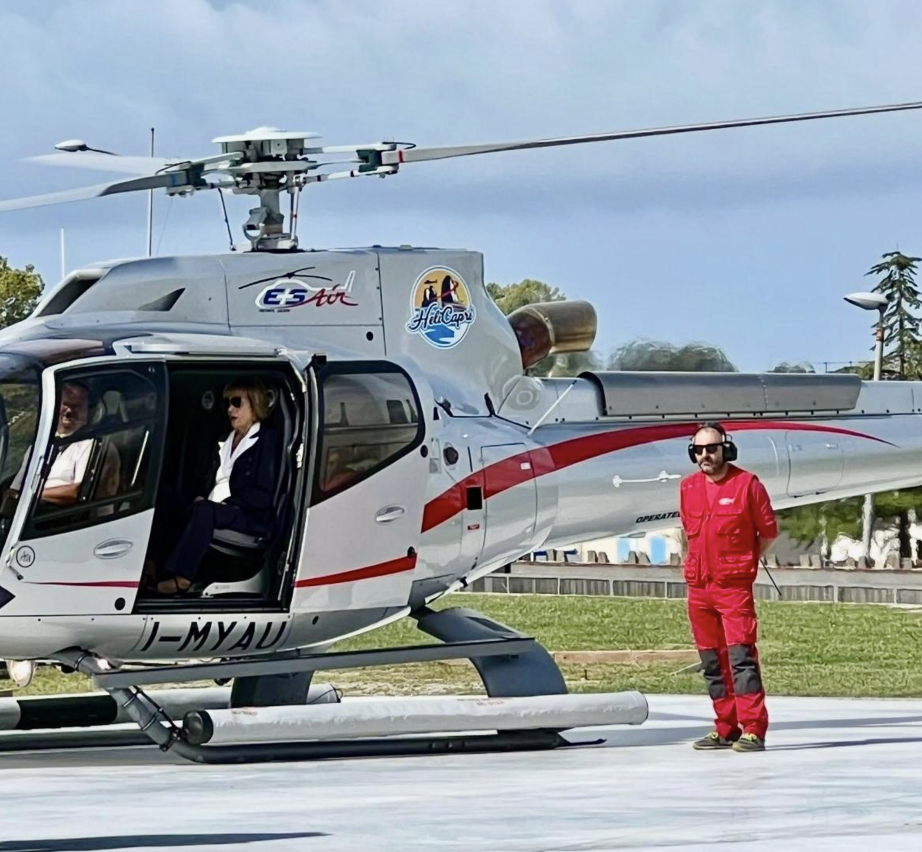
Some journeys are about getting from point A to point B as efficiently as possible.
Others are about transforming transportation into experience.
Helicopter transfers from Venice accomplish both simultaneously. You reach your destination in a fraction of the time ground travel requires, while seeing landscapes from perspectives that change understanding completely.
After 28 years organizing travel logistics in the Veneto region, I’ve learned that the journey matters as much as the destination. For travelers heading to Cortina d’Ampezzo for the 2026 Winter Olympics, exploring the Prosecco Hills, or needing efficient transfers anywhere in Italy from Venice, helicopters solve practical problems while delivering unforgettable experiences.
This isn’t about luxury for its own sake. It’s about using time wisely, accessing remote locations efficiently, and seeing Italy’s extraordinary geography the way it was meant to be seen — from above.
Understanding the Veneto region means understanding how terrain shaped everything — settlement patterns, wine production, transportation routes, even the existence of Venice itself. Helicopter perspective teaches that geography in minutes.
How Helicopter Transfers Work from Venice
The logistics are straightforward but require coordination.
Pickup begins in Venice itself. We arrange private water taxi pickup from your hotel, arriving at Piazzale Roma — the only point in Venice where cars can reach. Here, a private car waits to transport you to the helicopter departure point.
This seamless connection — boat to car to helicopter — eliminates the stress of navigating Venice with luggage, finding transportation, or coordinating multiple bookings independently. Everything is arranged as a single, continuous journey.
The helicopter departure location depends on the specific flight — different helipads serve different destinations and aircraft types. All are within reasonable driving distance from Venice.
Upon arrival at your destination, ground transportation can be coordinated if needed. For Cortina transfers during the Olympics, this means delivery directly to your accommodation or to Olympic venue areas. For panoramic tours, this means pickup and return to Venice the same day.
The entire process prioritizes efficiency and comfort. You’re not managing logistics — you’re experiencing a journey designed to work seamlessly from hotel door to final destination.
Winter Olympics 2026: Venice to Cortina Helicopter Transfers
The Milano Cortina 2026 Winter Olympics will bring unprecedented crowds to the Dolomites.
Cortina d’Ampezzo hosts alpine skiing, bobsled, luge, and curling events from February 6-22, 2026. Every hotel room within 50 kilometers will be booked. Roads will be congested with Olympic traffic. Parking will be impossible. Ground transportation that normally takes 2-3 hours could extend to 4+ hours during peak times.
Helicopter transfer from Venice to Cortina solves this entirely.
Flight time: approximately 35-40 minutes. You depart Venice area, fly over the Venetian plains as they give way to foothills, then enter the Dolomites proper. The mountains rise dramatically — pale limestone walls, vertical peaks, valleys carved by ancient glaciers.
The approach to Cortina by helicopter is spectacular. The Ampezzo valley opens below, surrounded by the Tofane peaks to the west, Cristallo to the northeast, the distinctive shapes of Pomagagnon and Sorapiss defining the skyline. Cortina itself appears as a compact Alpine town at 1,224 meters elevation, with Olympic venues visible across the valley.
Landing happens at Cortina’s heliport, approximately 2 kilometers from the town center. From there, ground transportation to your accommodation or directly to Olympic venues is straightforward.
For groups attending multiple Olympic events, helicopter transfers can be scheduled flexibly around competition times. Need to reach Cortina for morning alpine skiing, then return to Venice that evening? Possible. Want to stay in Venice but attend specific Olympic events in Cortina? Helicopter makes day trips viable where ground transportation would consume your entire day in travel.
The per-person cost becomes reasonable when shared among a group — families, corporate groups, or friend circles attending Olympics together. Four to six passengers per helicopter (depending on aircraft type and weight) means dividing the transfer cost multiple ways.
Weather considerations matter in February. The Dolomites in winter can experience challenging conditions — high winds, low clouds, snowstorms. Professional helicopter pilots are trained for Alpine winter flying and will only operate when safe. This means flexibility is essential. Having backup plans for ground transportation, or flexible timing around weather windows, ensures you reach Olympic events regardless of conditions.
Book Olympic helicopter transfers as early as possible. Demand will be extraordinary, and helicopter capacity is limited. We coordinate all logistics — Venice pickup, helicopter arrangement, Cortina delivery, return scheduling — as a complete package.
Prosecco Hills Panoramic Tours: UNESCO Heritage from Above
Forty kilometers north of Venice, the landscape transforms into one of Italy’s most distinctive wine regions.
The Prosecco Hills — officially designated UNESCO World Heritage in 2019 — stretch between Conegliano and Valdobbiadene. Steep slopes covered in geometric vine rows, medieval hilltop villages, narrow winding roads through valleys that seem impossibly vertical for agriculture.
Ground tours of the Prosecco Hills are beautiful. Driving through the region, stopping at wineries, tasting in historic cellars — this provides intimate understanding of how Prosecco is made.
Helicopter panoramic tours reveal what ground travel cannot: the complete geography that makes this wine possible.
From above, you see how vine rows follow contours, creating patterns across hillsides so steep that harvesting requires hand labor. Small villages appear exactly where terrain permits — on ridges, in valley intersections, anywhere the land flattens briefly. Church towers mark each settlement. Roads wind impossibly, switchbacking up slopes that look vertical from the air.
The Cartizze zone near Valdobbiadene — tiny, incredibly steep, producing the most prestigious Prosecco — becomes comprehensible only from above. From ground level, it’s scattered vineyards. From a helicopter, you see the precise geographic boundaries that define this special designation.
Typical Prosecco Hills helicopter panoramic tours include:
Flight over the core production zone between Conegliano and Valdobbiadene, showing the full extent of vine cultivation and how terrain shaped the industry.
Views of historic villas and castles scattered throughout the hills — these aren’t just architectural features, they’re evidence of how wine wealth shaped settlement patterns for centuries.
The transition zone where plains end and hills begin — understanding this geography explains why Prosecco production happens precisely here, where soil, elevation, and climate combine perfectly.
The northern edge where the Prealps begin rising — showing how the Prosecco region fits into broader Alpine geography.
Some tours include landing at hillside locations for winery visits and tastings, though this depends on helipad availability and weather. The combination of aerial perspective followed by ground-level experience creates complete understanding.
Duration: Typically 30-45 minutes flight time for panoramic tours, longer if including ground stops.
Best seasons: Spring (April-May) shows bright green vines beginning growth. Summer (June-August) displays full canopy and deep green. Autumn (September-October) brings harvest season and spectacular gold-amber colors. Winter (November-March) reveals the architectural patterns of vines without leaves, showing the human geometry imposed on natural landscape.
Photography from helicopter panoramic tours is extraordinary. The patterns, colors, and geographic drama create images impossible from ground level. Morning and late afternoon light provides the best conditions — warm tones, dimensional shadows, clear air.
Dolomites Panoramic Tours: Pale Mountains Rising
The Dolomites are unlike any other mountains in Europe.
These pale limestone peaks rise vertically from green valleys in formations so dramatic they seem impossible. UNESCO designated them World Heritage in 2009, citing exceptional beauty and geological significance.
From Venice, the Dolomites appear as a distant white wall on clear days. From a helicopter flying among them, they become immediate and overwhelming.
Helicopter panoramic tours of the Dolomites provide access to perspectives that ground travel can’t match. Mountain roads follow valleys. Hiking reaches specific peaks. Cable cars ascend to particular viewpoints. But helicopters move freely through three-dimensional space, showing how peaks relate to each other and revealing the Dolomites’ extraordinary geology from every angle.
Typical Dolomite panoramic tours include:
Major peak groups — Tre Cime di Lavaredo (Three Peaks), Marmolada (highest at 3,343 meters), Pelmo, Civetta, the Tofane massif near Cortina.
Alpine valleys — Val di Zoldo, Val di Cadore, the Ampezzo valley, Val Gardena. From above, you see how glaciers carved these valleys and how human settlement follows the only land flat enough for building.
High Alpine passes — Passo Giau, Passo Falzarego, Passo Pordoi. Understanding these historic routes between valleys shows how geography controlled trade, travel, and military strategy for centuries.
Alpine lakes — Lago di Misurina, Lago di Braies, Lago di Alleghe. These glacial lakes appear as brilliant blue or green punctuation marks among forests and pale rock.
Vertical rock faces and towers — the Dolomites’ distinctive geology creates walls rising 1,000+ meters vertically. From ground level, these are impressive. From a helicopter at the same elevation as the summits, they’re overwhelming.
The geological drama that makes the Dolomites unique becomes clear from the air. These aren’t volcanic mountains or granite peaks. They’re ancient coral reefs — seafloor from 250 million years ago, lifted and exposed by tectonic forces, now standing as pale limestone towers.
The color itself is distinctive. “Dolomite” is both place name and mineral name — calcium magnesium carbonate that gives these mountains their characteristic pale gray-white color, particularly dramatic against blue sky or dark forests.
Duration: 45-60 minutes for comprehensive panoramic tours, longer for extended routes or ground stops.
Landing options: Some tours include landing at high Alpine refuges (rifugi) for coffee, lunch, or simply experiencing the altitude and views from ground level. These combinations of aerial and terrestrial experience create complete mountain understanding.
Best conditions: Summer (June-September) provides reliable weather, though afternoon thunderstorms are common. Spring (April-May) and autumn (September-October) offer crystal-clear air when conditions permit. Winter (December-March) delivers extraordinary clarity and dramatic snow coverage but higher cancellation rates from weather.
Photography in the Dolomites from helicopters is spectacular year-round. The vertical drama, the color contrast between pale rock and dark forest or white snow, the scale of peaks rising thousands of meters — these create images that capture the Dolomites’ extraordinary character.
Helicopter Transfers Throughout Italy from Venice
Beyond specific panoramic tours, helicopters provide practical point-to-point transfers anywhere in Italy from Venice.
Common transfer routes include:
Venice to Milan (Malpensa, Linate, or city center) — approximately 60-75 minutes versus 2.5-3 hours by train.
Venice to Florence — 60-70 minutes versus 2+ hours by train.
Venice to Rome — 90-120 minutes versus 3.5-4 hours by train.
Venice to Lake Como, Lake Garda, or other northern Italian destinations.
Venice to skiing resorts throughout the Alps — Cortina, Madonna di Campiglio, Selva di Val Gardena, San Martino di Castrozza.
Venice to coastal destinations — Portofino, Cinque Terre, Amalfi Coast (longer flight, multiple stops possible).
These transfers suit business travelers with tight schedules, families wanting to maximize vacation time, or anyone who values efficiency and unique travel experiences.
The logistics remain consistent: Private water taxi from your Venice hotel to Piazzale Roma, private car to helicopter departure point, direct flight to destination, ground transportation coordination upon arrival if needed.
For business travelers particularly, helicopter transfers remove the uncertainty of traffic, train delays, or connection problems. You depart and arrive on schedule, with time to spare for meetings or further travel.
For vacation travelers, helicopter transfers convert dead time (sitting on trains or in cars) into active experience. The journey itself becomes memorable rather than just necessary.
Practical Considerations for Helicopter Services
Understanding how helicopter operations work helps set realistic expectations.
Weather dependency is absolute. Helicopters cannot fly safely in fog, low clouds, high winds, thunderstorms, or other adverse conditions. Professional pilots make go/no-go decisions based on safety, not schedule convenience.
This means flexibility is essential. When booking helicopter services, having backup plans or flexible timing ensures your travel happens even if weather forces rescheduling. This is particularly important during Winter Olympics when event schedules are fixed — booking helicopter transfers days before events (when weather forecasting is more accurate) rather than months ahead helps, though capacity may be limited.
Advance booking matters. Helicopter availability is finite. Peak seasons, major events like the Olympics, and popular destinations require booking weeks or months ahead. Last-minute availability exists occasionally during slow periods but shouldn’t be counted on.
Weight restrictions apply. Helicopters have maximum weight limits for safe operation. Passengers and luggage combined must stay within these limits. Heavy winter Olympic gear, ski equipment, or extensive luggage requires planning. In some cases, sending luggage separately by ground transportation while passengers fly makes more sense.
Group size determines aircraft selection. Smaller helicopters accommodate 4-5 passengers. Very large groups may require multiple aircraft. The per-person cost decreases with larger groups since helicopter capacity is fixed.
Clothing and preparation matter. Helicopters are enclosed and heated, but destinations may not be. Landing in Cortina in February means Alpine winter conditions. Dressing appropriately ensures comfort upon arrival. Motion sensitivity affects some passengers — medication taken in advance helps if you’re prone to airsickness, though helicopter flight is generally smooth.
Noise is significant. Headsets are provided for communication and hearing protection. Conversations during flight happen through intercom. Some passengers find engine noise intrusive; others find it adds to the adventure.
Photography equipment should be secured. Cameras must be protected against dropping or shifting during flight. Window seats provide excellent opportunities, though glare and reflections sometimes interfere. Discussing photography priorities when booking allows optimal seat assignment.
Who Benefits Most from Helicopter Services
Helicopter transfers and panoramic tours suit specific travel needs:
Winter Olympics attendees needing efficient, flexible transportation between Venice and Cortina during February 2026 when ground transport will be congested and unpredictable.
Time-constrained travelers — business visitors, cruise passengers with limited port time, families maximizing vacation days.
Special occasion travelers — anniversaries, proposals, milestone celebrations where unique experiences justify premium investment.
Geography and landscape enthusiasts who want to understand how terrain shaped culture, settlement, and activities like wine production.
Photography professionals and serious amateurs seeking aerial perspectives impossible from ground level.
Groups sharing costs — families, corporate teams, friend circles where per-person cost becomes reasonable when divided among 5 passengers.
Travelers with mobility limitations where helicopter access avoids difficult terrain, long walks, or accessibility challenges that ground touring presents.
Helicopter services don’t suit everyone. Some travelers prefer ground-level immersion, others find the investment unjustified for their priorities. Venice and the Veneto offer extraordinary experiences at every investment level, and helicopters occupy the premium end of that spectrum.
The question isn’t whether helicopter services are objectively worth it. It’s whether they solve problems you have or provide experiences you value enough to justify the investment.
Combining Helicopter and Ground Experiences
The most comprehensive understanding comes from combining aerial and ground perspectives.
For the Prosecco Hills: Helicopter panoramic tour showing the complete geographic context, followed by ground winery visits for tastings and lunch. The aerial perspective makes the ground experience more meaningful — you understand where you are within the larger landscape.
For the Dolomites: Helicopter flight showing the mountains’ full drama and scale, followed by ground time at specific locations — Alpine refuges, historic towns like Cortina, hiking opportunities if weather and season permit.
For Cortina Olympics: Helicopter transfer delivering you efficiently, combined with local Olympic venue tours and event attendance. The flight provides geographic orientation that makes ground exploration more comprehensible.
We coordinate these combined experiences as complete packages. The helicopter portion handles time efficiency and aerial perspective. Ground portions provide cultural depth, tastings, meals, and intimate encounters with places and people.
Private ground tours complement helicopter services perfectly — one provides geographic breadth, the other cultural depth. Together, they create understanding impossible from either approach alone.
Alternative Ground Transportation Options
If helicopter services don’t fit your plans, excellent ground alternatives exist.
For Prosecco Hills: Full-day private tours by car or van visit multiple wineries, include tastings and traditional lunch, and provide ground-level immersion in the landscape. Travel time is 90 minutes each way from Venice, but the journey itself is scenic.
For Cortina and the Dolomites: Private car service provides comfortable ground transportation in approximately 2-3 hours, weather permitting. This approach allows stops at intermediate points — Pieve di Cadore, Lago di Misurina, mountain passes — that helicopter flights bypass.
For other Italian destinations: Italy’s excellent train network connects Venice to major cities efficiently. High-speed trains reach Milan, Florence, and Rome quickly and comfortably at far lower cost than helicopter transfers.
For Venice area transportation: Vaporetto passes provide unlimited water bus access throughout the lagoon. Private water taxis offer point-to-point convenience for luggage transport or airport transfers.
Each transportation mode serves different needs. Choose based on your priorities: time efficiency, cost, experience quality, flexibility, or comfort.
Plan Your Helicopter Experience
For helicopter transfers to Cortina Olympics, Prosecco Hills panoramic tours, Dolomites panoramic flights, or point-to-point transfers anywhere in Italy from Venice, contact Tour Leader Venice directly. We coordinate all logistics — Venice pickup by private boat and car, helicopter arrangements, ground transportation at destinations, and return scheduling.
For comprehensive Winter Olympics planning: Complete Milano Cortina 2026 information helps you understand event schedules, venue locations, and how helicopter transfers fit into your Olympic experience.
For ground tours complementing helicopter experiences: Private tours throughout the Veneto provide cultural depth and local expertise that make aerial perspectives more meaningful.
For Prosecco region exploration: Day trips from Venice offer ground-level winery visits, tastings, and traditional meals in UNESCO Heritage landscape.
For Venice orientation and cultural experiences: Skip-the-line museum tickets and private walking tours create the foundation of understanding that makes all regional exploration more rewarding.
Experience Italy’s Extraordinary Geography the Way It Deserves — From Above
After 28 years organizing travel in the Veneto and being featured by Rick Steves, NBC, and US Today, I’ve learned that how you travel matters as much as where you travel. Helicopter services transform logistics into experiences while delivering efficiency impossible by ground transportation. Contact me to coordinate your helicopter transfers and panoramic tours.
Reach out to Tour Leader Venice for helicopter coordination or book complementary ground experiences and cultural tours — combine aerial efficiency with cultural depth for complete understanding of northeastern Italy.
Frequently Asked Questions
How far in advance should I book helicopter transfers for the Winter Olympics?
Book Cortina Olympic helicopter transfers as early as possible — ideally 2-3 months before February 2026. Demand will be unprecedented, helicopter capacity is limited, and the best availability windows disappear quickly. Last-minute bookings may be possible but risk disappointment when capacity is exhausted. Weather flexibility is essential in February, so discuss backup dates and contingency plans when booking. We coordinate all logistics including Venice pickup and Cortina delivery, ensuring seamless transfers even during Olympic chaos.
What happens if weather cancels my helicopter flight?
Weather cancellations are refunded or rescheduled without penalty — safety always takes priority over schedule. For time-critical travel like Olympic events, having backup ground transportation plans ensures you reach your destination regardless of flying conditions. Professional helicopter pilots monitor weather constantly and make go/no-go decisions based on current and forecast conditions. Often weather windows exist where flights can operate safely — morning before afternoon storms, or specific days when conditions improve. Flexible timing increases success rates significantly.
Can helicopter panoramic tours include landing for photos or visits?
Yes, when helipads and weather permit Dolomites tours can land at high Alpine refuges for refreshments or simply to experience the altitude and views from ground level. These combined aerial-ground experiences create more complete understanding than flight alone. Landing additions extend total tour duration and must be coordinated in advance with the specific locations. Not all destinations have suitable helipads, and weather affects landing options more than flight-only tours. Discuss your priorities when booking so we can design optimal itineraries.