You’ve left Venice, but Venice hasn’t left you.
This happens to everyone. You return home from your trip — back to regular life, to routines that feel suddenly mundane — and find yourself thinking about Venice at random moments. The light on the canals. The sound of water against stone. The particular quality of evening in a Dorsoduro campo. The city gets into your system in ways that other destinations simply don’t.
For 28 years, I’ve watched visitors become completely enchanted with Venice. They arrive planning a three-day stop as part of a larger Italy trip. They leave already planning their return. Some come back annually. Others move here permanently. Many simply miss the city constantly, checking weather forecasts for Venice, reading news about acqua alta, maintaining a connection across thousands of miles because something about this impossible city refuses to let go.
Modern technology provides something previous generations couldn’t access: the ability to visit Venice virtually, any time, from anywhere in the world. High-definition webcams positioned throughout the city stream live footage 24 hours a day. You can watch the Grand Canal at dawn from your breakfast table in Kansas. You can check current conditions in San Marco before booking your next trip. You can simply spend fifteen minutes watching Venice exist — boats passing, people crossing bridges, light changing across water — because you miss it and this virtual connection helps.
These aren’t tourist gimmicks. They’re genuinely high-quality streams showing real Venice in real time. I use them myself — checking weather conditions, monitoring crowd levels, occasionally just watching the city where I’ve lived nearly three decades because even familiarity doesn’t erase Venice’s fundamental appeal.
This is your guide to the best Venice webcams — where they’re positioned, what you’re actually seeing, and how to use them to stay connected to the city that got under your skin and refuses to leave.
Understanding Venice beyond a single visit means maintaining connection to the city’s daily rhythms.
The Rolling Rotation: Venice’s Greatest Hits
Location: Multiple locations throughout Venice Stream: https://www.youtube.com/watch?v=ph1vpnYIxJk
This stream rotates through Venice’s most iconic locations, switching views every few minutes to show different parts of the city throughout the day and night.
What you’re seeing: The rotation includes San Marco Basin, the Rialto Bridge, the Grand Canal from multiple angles, and other high-traffic tourist areas. The camera moves systematically, giving you a curated tour of Venice’s most photogenic locations without requiring you to choose which single view to watch.
This stream excels for several specific uses:
Checking overall Venice conditions before booking a trip. If you’re planning a visit and want to see what Venice actually looks like right now — not what it looked like in stock photos from perfect weather days — this rotation shows current reality. Sunny? Rainy? Foggy? Crowded? Empty? The rotation cycles through enough locations that you get genuine sense of citywide conditions rather than single-location snapshot.
Experiencing Venice’s daily rhythm. Watch for thirty minutes and you’ll see morning commuters, midday tourist crowds, evening calm, night quietness. The rotation captures how Venice’s character shifts throughout the day in ways that still photographs or tourist videos never communicate.
Background ambiance while working. Many people who’ve fallen in love with Venice run these streams on second monitors while working from home. It’s not quite being there, but it’s vastly better than generic background noise. The sound of water, the glimpses of familiar locations, the sense of connection to a place that matters to you — these provide psychological comfort that productivity research is only beginning to understand.
The rotation format prevents fixation on single view while maintaining continuous Venice connection. You’re not staring at one bridge for hours. You’re visiting multiple locations, much as you would during an actual Venice day, simply doing so virtually rather than physically.
Ponte delle Guglie: Cannaregio’s Morning Pulse
Location: Cannaregio, northern Venice near the train station Stream: https://www.youtube.com/watch?v=HpZAez2oYsA
The Ponte delle Guglie (Bridge of the Spires) spans the Cannaregio Canal near where it meets the Grand Canal, roughly 5-7 minutes’ walk from Santa Lucia train station.
What you’re actually seeing: This camera faces northwest along the Cannaregio Canal toward the bridge itself. The Cannaregio Canal is one of Venice’s major waterways — wide enough for vaporetti, water taxis, and delivery boats but narrow enough that you see details clearly.
The bridge visible in the frame is distinctive — decorated with four obelisk-style spires (hence the name) and connecting two residential Cannaregio neighborhoods. The architecture surrounding the canal is classic Venetian residential — palazzo facades in various states of repair, ground-floor shops, the visual texture that defines Venice outside its tourist zones.
When this stream shines:
Early morning (6:00-8:00 AM Venice time) shows Cannaregio waking up. This is when Venetians begin their actual days — workers heading to jobs, delivery boats supplying shops and restaurants, the city functioning before tourism begins. You’ll see genuine daily Venice rather than tourist performance.
Midday reveals boat traffic patterns. The Cannaregio Canal carries constant water traffic — vaporetti on scheduled routes, water taxis ferrying passengers and luggage, delivery boats transporting goods. Watching this choreography reveals how Venice actually moves materials and people through a city without roads.
Evening (7:00-9:00 PM) shows neighborhood life. Residents crossing the bridge after work, locals heading to nearby bars and restaurants, the casual social flow that makes Venice feel like actual city rather than museum. This is Cannaregio functioning as residential neighborhood, which tourism often obscures but which this webcam captures clearly.
What to watch for: Acqua alta warnings become visible here before affecting more central Venice. If the canal water level is rising noticeably, flooding may be imminent. The boats’ wakes also indicate conditions — calm water versus choppy surface reveals wind and weather patterns affecting the lagoon.
Ponte delle Guglie & Strada Nova: The Tourist Artery
Location: Cannaregio, connecting train station area to Rialto Stream: https://www.youtube.com/watch?v=yGQepsHPcN4
This camera angle captures both the Ponte delle Guglie bridge and Strada Nova — the main pedestrian thoroughfare running through Cannaregio from the train station toward the Rialto Bridge.
What you’re seeing: Strada Nova is Venice’s busiest pedestrian street. Not the most atmospheric. Not the most beautiful. Simply the most trafficked route for people moving between the train station and central Venice. The street is relatively wide by Venice standards — perhaps 4-5 meters — lined with shops, restaurants, and businesses serving the constant foot traffic.
The camera position shows both the bridge crossing the Cannaregio Canal and the approach to Strada Nova, capturing the intersection where water-based and land-based Venice meet.
This stream reveals tourism patterns more clearly than any other webcam. During peak season (May-September), Strada Nova fills with near-constant crowds from morning through evening. Shoulder season (March-April, October-November) shows significantly reduced traffic. Winter (December-February) can appear almost empty during early morning or late evening.
If you’re planning a Venice trip and want honest crowd assessment, check this camera at various times during the weeks before your visit. The crowd density on Strada Nova reflects overall Venice tourism pressure — if this main artery is empty, the entire city is quiet. If it’s packed, everywhere else is worse.
When to watch: Midday (11:00 AM-2:00 PM) shows maximum crowd density. This is when tour groups move through Venice, when cruise ship passengers traverse from Piazzale Roma toward San Marco, when day-trippers from mainland hotels explore the city. The contrast between summer midday Strada Nova and winter early morning Strada Nova is so dramatic it barely seems like the same location.
Early evening (5:00-7:00 PM) shows different traffic patterns. Day-trippers departing, overnight visitors heading to dinner, locals moving through the tourist flow on their way home from work. The mixed crowd demographics become visible — tourists with cameras and maps, Venetians moving purposefully, the two populations coexisting but clearly distinguishable by body language and behavior.
Canal Grande: The Grand Canal From Multiple Angles
Location: Various Grand Canal viewpoints Streams:
- https://www.youtube.com/watch?v=HkuZmbVsgF4
- https://www.youtube.com/watch?v=P6JA_YjHMZs
- https://www.youtube.com/watch?v=lFQ_BvxIcnI
These three streams offer different Grand Canal perspectives, showing Venice’s main waterway from various positions along its S-curve through the city.
What the Grand Canal actually is: Venice’s primary waterway, roughly 3.8 kilometers long, averaging 30-90 meters wide, dividing the city into two main sections connected by four bridges (Scalzi, Rialto, Accademia, Costituzione). The canal serves as Venice’s main thoroughfare — the equivalent of a major boulevard in cities with roads.
The Grand Canal isn’t simply tourist attraction. It’s functioning infrastructure. Vaporetti (water buses) travel scheduled routes. Water taxis transport passengers and luggage. Delivery boats supply restaurants and shops. Private boats carry residents. Emergency vessels (ambulances, fire) respond to incidents. The canal is Venice’s essential artery, and these webcams document how it actually operates.
What makes Grand Canal webcams valuable:
Watching weather and water conditions. The Grand Canal’s width makes wind effects visible. Choppy water indicates strong winds affecting the lagoon. Calm, glassy water suggests gentle conditions throughout Venice. Understanding acqua alta becomes easier when you can see actual water levels against building foundations and canal walls.
Observing boat traffic patterns. The Grand Canal carries constant traffic, but the density and types of vessels shift throughout the day. Early morning sees delivery boats. Midday brings tourist traffic. Late evening shows primarily vaporetti and occasional taxis. These patterns reveal Venice’s functional rhythms beneath its tourist identity.
Appreciating the architecture. The palaces lining the Grand Canal represent centuries of Venetian wealth and power. Even through webcam, the architectural details — Gothic windows, Renaissance facades, Byzantine elements — communicate the extraordinary cultural achievement Venice represents. Watching sunrise light hit these facades, or seeing them illuminated at night, provides aesthetic pleasure that static photographs simply can’t match.
Best viewing times: Sunrise (varies by season, roughly 6:00-7:30 AM) and sunset (again seasonal, roughly 5:00-8:00 PM) deliver the most dramatic light. The Grand Canal’s orientation and the palace facades’ positioning mean morning and evening light create constantly changing shadows and highlights that reveal architectural details lost in midday sun.
Night viewing shows Venice’s nocturnal character — the palace windows glowing, the reduced boat traffic, the city settling into quieter evening rhythms. This after-dark Grand Canal is what overnight visitors experience but what day-trippers miss entirely.
Bacino di San Marco: Where Venice Meets the Sea
Location: San Marco Basin, the waterfront area between Doge’s Palace and the lagoon entrance Stream: https://www.youtube.com/watch?v=dFBRpHHwQeg
The Bacino di San Marco is the wide water basin where Venice’s Grand Canal meets the lagoon opening toward the Adriatic. This is Venice’s historic waterfront — where ships once arrived from maritime empire, where the Republic displayed its power, where contemporary cruise ships now appear as dramatic anachronism.
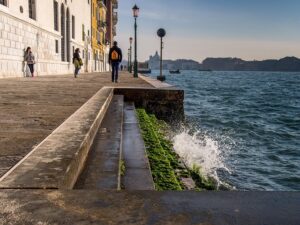
What you’re seeing: The camera likely positions somewhere along the Riva degli Schiavoni (the broad waterfront promenade) facing south across the basin. Visible landmarks typically include San Giorgio Maggiore — Palladio’s magnificent church on the island directly across the basin — and the distant Lido, the barrier island separating Venice’s lagoon from the Adriatic Sea.
The basin itself sees constant vessel traffic — vaporetti crossing toward San Giorgio and the Giudecca, water taxis transporting passengers, cruise ship tenders when ships anchor offshore, occasional sailing vessels, and the perpetual movement that defines Venice’s waterfront.
This viewpoint captures Venice’s impossible geography. You’re watching a major European city that exists entirely on water. No roads lead here. No cars arrive. Everything and everyone reaches Venice by boat. The basin documents this reality constantly — every movement, every arrival, every departure happens on water.
When this stream becomes invaluable: Acqua alta forecasting. The Bacino di San Marco shows sea level relative to the waterfront. When water is visibly high — lapping close to the promenade level — flooding is imminent or already affecting low-lying areas like Piazza San Marco. Regular viewers learn to read these water levels intuitively.
Cruise ship arrivals. The debate over cruise ships in Venice remains contentious. These massive vessels occasionally appear in the basin — their scale dwarfing historic architecture, creating surreal juxtaposition of contemporary mass tourism against Renaissance city. Whether you find this fascinating or appalling, the webcam documents the reality.
Weather observation. The basin’s exposure means weather conditions become immediately visible. Fog rolling in from the Adriatic. Storm systems approaching. Clear skies extending to the horizon. The open water makes meteorological patterns obvious in ways that narrow canals and streets obscure.
Best viewing: Morning light (7:00-9:00 AM) illuminates San Giorgio Maggiore beautifully. The church catches early sun that creates the golden glow photographers and painters have captured for centuries. Evening (one hour before sunset) shows the basin in warm light that makes the entire scene look like Renaissance painting — which, essentially, it is.
Ponte di Rialto: Venice’s Most Iconic Bridge
Location: The Rialto Bridge spanning the Grand Canal Stream: https://www.youtube.com/watch?v=K_Vg94nBiaY
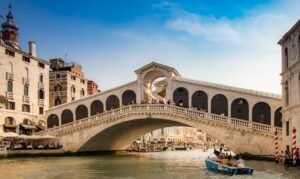
The Rialto Bridge is Venice’s most famous crossing — the oldest surviving bridge spanning the Grand Canal, completed in 1591, one of Venice’s most recognizable landmarks.
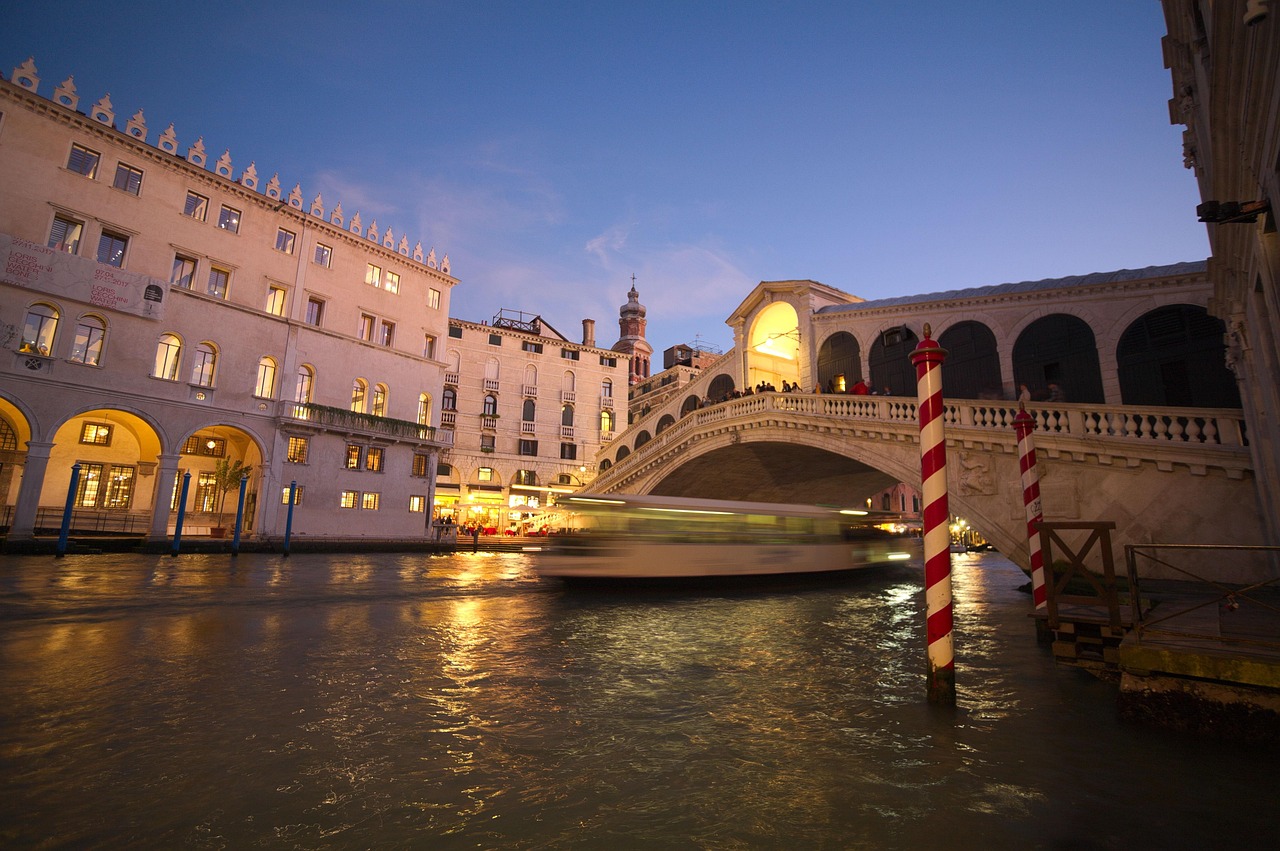
What you’re seeing: The camera angle typically shows the bridge from the Grand Canal, capturing both the structure itself and the constant foot and boat traffic surrounding it. The bridge’s distinctive single stone arch and the covered walkway lined with shops create instantly recognizable silhouette.
The Rialto area represents Venice at its most intensely touristic and its most functionally Venetian simultaneously. The Rialto Market operates every morning — fish and produce arriving before dawn, wholesale buyers selecting ingredients, retail customers shopping through midmorning. The market is meters from the bridge, meaning this webcam captures both tourist landmark and functioning city market in single frame.
What makes this stream compelling: The Rialto Bridge never stops. At literally any hour — 3:00 AM, noon, 9:00 PM — people cross it. The density varies dramatically, but the bridge always carries traffic. Watching the crossing patterns reveals Venice’s 24-hour rhythm in ways that emptier locations can’t match.
Vaporetto traffic beneath the bridge provides constant movement. Line 1 and Line 2 — the Grand Canal’s primary water bus routes — pass under the bridge every few minutes. The boats’ careful navigation through the arch, their precise timing to avoid collisions, and the wake patterns they create document the skilled seamanship required to operate Venice’s water transportation.
Best viewing times: Predawn (5:00-6:00 AM) shows the market workers arriving, the wholesale operations beginning, Venice preparing to feed itself before tourists wake. This is the Rialto that actually matters to residents rather than the Rialto that performs for cameras.
Midday (11:00 AM-2:00 PM) shows maximum tourist density. The bridge becomes nearly impassable, creating the gridlock that frustrates visitors but which this webcam documents from comfortable distance. If you’re planning a Venice trip and want honest crowd assessment, check the Rialto webcam at midday during your intended travel season.
Late evening (10:00 PM-midnight) shows the bridge’s beautiful illumination and the dramatically reduced crowd. The architecture reveals itself without human obstruction. The Grand Canal traffic drops to occasional vaporetti and taxis. This nighttime Rialto is what overnight visitors see but what day-trippers miss entirely.
San Vio: Dorsoduro’s Quiet Canal
Location: Dorsoduro, near the Accademia area Stream: https://www.youtube.com/watch?v=JqUREqYduHw
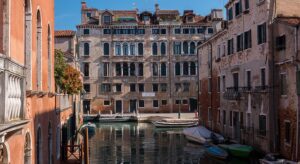
San Vio represents quieter, more residential Venice — a small campo and canal in Dorsoduro, one of the city’s most pleasant neighborhoods for both residents and visitors seeking balance between cultural access and genuine neighborhood atmosphere.
What you’re seeing: A relatively narrow canal with modest boat traffic, surrounded by residential buildings in various states of repair and renovation. This isn’t spectacular Venice — no grand palaces, no famous landmarks visible. It’s simply beautiful, well-proportioned residential architecture creating the visual texture that defines neighborhoods where people actually live.
Dorsoduro balances cultural institutions with residential character better than almost any other Venice sestiere. The Accademia Gallery, Ca’ Rezzonico, Peggy Guggenheim Collection all operate within minutes of this location. But the immediate area — San Vio specifically — maintains quiet neighborhood quality that tourist zones completely lack.
Why this webcam matters: It shows the Venice tourists rarely notice. No cruise ship passengers appear here. No tour groups pass through. The people visible are typically locals going about daily routines — grocery shopping, heading to work, socializing in the campo, the ordinary activities that prove Venice still functions as actual city rather than solely as tourist attraction.
The canal’s modest size means boat traffic remains manageable. You’ll see occasional delivery boats, rare private boats, perhaps a gondola if the gondolier is providing a quieter, less touristy route. What you won’t see is the constant congestion that defines the Grand Canal or the chaos that surrounds major landmarks.
Best viewing: Early morning (6:30-8:00 AM) shows residential Venice waking up. Shutters opening. Residents heading to nearby bakeries. The neighborhood beginning its day before tourism begins. This timing reveals how Venetians actually live — routines, rhythms, and daily practices that summer tourism completely obscures.
Late afternoon (4:00-6:00 PM) brings children playing in the campo — one of Venice’s increasingly rare sights as residential families continue leaving. Seeing children playing here reveals that Dorsoduro still functions as place where families actually live, where childhood happens, where Venice maintains something beyond pure tourism.
Evening (7:00-9:00 PM) shows neighbors socializing. Campo San Vio becomes informal gathering space where locals chat, catch up on neighborhood news, maintain the social networks that keep residential Venice functioning despite tourism pressure and population decline.
Campo Santa Maria Formosa: Castello’s Social Heart
Location: Castello, one of Venice’s largest and most residential neighborhoods Stream: https://www.youtube.com/watch?v=WjOGhNDX51M
Campo Santa Maria Formosa is one of Venice’s largest and most beautiful campos — an irregular-shaped open square in Castello surrounded by the church of Santa Maria Formosa and various residential and commercial buildings.
What you’re seeing: The campo itself serves as neighborhood gathering space — tables from surrounding cafés, occasional market stalls, children playing, locals socializing, the daily rhythms that make Venice neighborhoods function as communities rather than simply as tourist zones.
The church visible in frame — Santa Maria Formosa — holds important Renaissance paintings including works by Palma il Vecchio. The church is free to enter or charges minimal admission, making it one of Venice’s excellent cultural values that tourists often miss while rushing between more famous landmarks.
Why this location rewards watching: Castello is Venice’s largest sestiere and the one that maintains strongest residential character despite tourism. Campo Santa Maria Formosa exemplifies this — it’s beautiful enough to attract visitors but functional enough that locals dominate the space rather than being overwhelmed by tourism.
The campo hosts occasional outdoor events — small markets, performances, community gatherings that serve neighborhood residents rather than tourist audiences. The webcam might catch these spontaneous events that planned tourism never encounters.
Best viewing times: Market days (typically 2-3 times weekly, though schedules vary) bring produce vendors, flower sellers, and locals shopping for fresh ingredients. This market is smaller and less tourist-oriented than the Rialto, revealing how neighborhood-level food distribution operates throughout Venice.
Evening aperitivo hour (6:00-8:00 PM) shows the campo’s café tables filling with locals drinking Spritz or wine, eating cicchetti, socializing before dinner. This bacaro culture happens throughout Venice but becomes most visible in residential neighborhoods like Castello where tourism hasn’t completely displaced daily life.
Weekend mornings show families — children playing, parents chatting, the multi-generational social mixing that defines how Italian communities traditionally function. Seeing this in Venice proves the city still maintains residential population despite constant reports of demographic crisis.
Ponte della Stazione: The Arrival Point
Location: Immediately outside Venice’s Santa Lucia train station Stream: https://www.youtube.com/watch?v=4wKN93E3K8g
The Ponte della Stazione (Station Bridge) — also called Ponte degli Scalzi — crosses the Grand Canal directly in front of Santa Lucia train station, Venice’s primary rail arrival point.
What you’re seeing: The camera likely faces the bridge and the Grand Canal from near the station entrance. This viewpoint captures every arriving and departing train passenger who continues toward central Venice — essentially everyone who arrives by rail and doesn’t immediately board a vaporetto or water taxi.
The area is perpetually busy. Train arrivals bring waves of tourists emerging with luggage, looking disoriented, consulting maps, figuring out which direction to walk. Tour groups gather with guides holding flags. Water taxis wait at the canal. Vaporetti depart on scheduled routes. The chaos is constant, democratic, and utterly Venice.
Why this webcam matters: It shows Venice’s primary arrival experience. If you’re planning a first Venice trip and arriving by train, this stream shows exactly what you’ll encounter — the bridge crossing, the immediate Grand Canal views, the crowd density, the physical geography you’ll navigate while carrying luggage and processing your first Venice impressions.
The bridge also serves as barometer for overall Venice tourism. During peak season, the bridge carries near-constant foot traffic creating bottlenecks. During winter off-season, the traffic thins dramatically but never stops entirely. Comparing summer midday bridge traffic to winter early-morning traffic reveals Venice’s tourism seasonality more clearly than any statistics.
Best viewing: Train arrival times (scheduled throughout the day but concentrated during morning and late afternoon) bring surges of people crossing the bridge. Watching these arrivals reveals the tourist demographics visiting Venice at any given time — age groups, tour group prevalence, luggage volume (day-trippers versus overnight visitors).
Late evening (10:00 PM-midnight) shows departures rather than arrivals. People leaving Venice, rolling luggage back across the bridge, the sadness of departure visible even through webcam. If you’ve fallen in love with Venice and left reluctantly, watching others make this same departure creates odd solidarity — you’re not alone in finding leaving difficult.
Very early morning (5:00-6:00 AM) shows Venice before tourism begins. Workers crossing the bridge toward jobs in central Venice. Delivery operations supplying the station area’s cafés and shops. The city functioning rather than performing — exactly the Venice that webcams allow you to access regardless of physical location.
How to Actually Use These Webcams
Simply watching isn’t the only way these streams provide value. Several strategic uses maximize their utility:
Trip planning and timing decisions. Check the webcams during the weeks before your planned visit, at times matching when you’ll actually be in Venice. If you’ll arrive midday and the webcams show overwhelming crowds, adjust your arrival timing or prepare mentally for what you’ll encounter. If evening hours show dramatic beauty and reduced crowds, plan activities around these optimal times.
Real-time weather verification. Weather forecasts predict, but webcams show current reality. Before deciding whether to visit exposed outdoor locations like the Zattere or Giudecca, check relevant webcams to see actual conditions right now rather than relying on forecasts that might not accurately reflect Venice’s microclimate.
Acqua alta monitoring. If you’re in Venice and acqua alta is forecast, the webcams show which areas are actually flooding versus which remain dry. The Bacino di San Marco and Rialto Bridge streams particularly reveal water levels that indicate flooding severity. Understanding acqua alta becomes practical rather than abstract when you can see actual water levels rising in real time.
Nostalgia and connection. This is the most personal use and the hardest to explain to people who haven’t fallen in love with Venice. Simply watching the city exist — boats passing, light changing, people moving through spaces you remember walking yourself — provides psychological comfort that transcends rational explanation. You’re maintaining connection to place that matters to you, and modern technology makes this connection possible in ways previous generations never accessed.
Sharing Venice with others. Showing these streams to friends or family who haven’t visited helps explain why you love Venice so intensely. Still photographs and even professional videos create distance. Live streams showing real Venice happening right now create immediacy that helps others understand your attachment.
Background presence during work or daily life. Many Venice lovers run these streams on secondary monitors, tablets, or televisions while working, reading, or simply being at home. It’s not active watching — it’s presence. Venice exists in peripheral vision, occasionally catching your attention with particularly beautiful light or interesting activity, mostly just being there the way ambient music or white noise provides background comfort.
The Limitations of Virtual Venice
Webcams provide genuine value but can’t replace actual presence. Understanding their limitations prevents disappointment while maximizing what they do deliver.
You can’t control the view. The cameras are fixed positions showing specific angles. If something interesting happens outside the frame, you miss it. If the most beautiful light is hitting areas the cameras don’t capture, you don’t see it. You’re limited to what the camera operators chose to show, which means missing 95% of what makes Venice extraordinary.
You miss sensory dimensions that define Venice experience. The smell of the lagoon. The sound of water against stone that cameras rarely capture well. The temperature shifts moving from sun to shade. The physical experience of walking uneven cobblestones. The taste of cicchetti at a neighborhood bacaro. These elements define Venice as much as visuals — arguably more — and webcams provide none of them.
The streams show tourist Venice more than residential Venice. Cameras position at famous landmarks and high-traffic areas that generate viewer interest. They rarely show the residential neighborhoods, the quiet back canals, the neighborhood bars where Venetian dialect dominates and tourists barely appear. The Venice these webcams document is partially genuine, partially curated for external viewing.
Technical limitations affect quality. Weather conditions impact camera performance. Fog reduces visibility to nothing. Rain obscures lenses. Night viewing shows primarily lights without detail. Connection issues cause buffering or dropped streams. These technical constraints prevent webcams from delivering consistent high-quality viewing experience.
Webcams create consumption without contribution. Watching Venice through webcams means experiencing the city without supporting it economically. You’re not buying meals, not paying for accommodation, not funding the tourism infrastructure or the cultural institutions. For casual viewing, this matters minimally. But relying on webcams as substitute for actual visiting means consuming Venice’s image while providing nothing that helps the city survive its genuine challenges.
Venice faces real problems — depopulation, tourism pressure, infrastructure costs, climate change threats. Webcam viewing doesn’t address any of these. It provides personal comfort while contributing nothing to the city itself.
From Virtual to Real: Planning Your Return
The ultimate purpose of these webcams should be planning your next actual visit rather than substituting for one.
Use the webcams to refine your Venice understanding. Notice which neighborhoods appeal to you. Identify areas you want to explore more thoroughly next visit. Recognize patterns in light, weather, and crowd timing that inform better trip planning.
Choosing where to stay becomes easier when you’ve watched different neighborhoods through webcams. Dorsoduro’s character, Cannaregio’s residential atmosphere, San Marco’s tourist intensity — these distinctions become clear through extended webcam observation in ways single trip sometimes doesn’t reveal.
Time your next visit based on what the webcams show. If March’s light and reduced crowds appeal through webcam viewing, book March rather than defaulting to summer. If winter fog creates atmosphere you love, plan December-January despite cold. The webcams document seasonal variations that help identify which Venice you want to experience.
Understanding seasonal differences allows choosing visiting times that match your preferences rather than generic “best time to visit” recommendations that ignore individual variation in what different travelers actually value.
Book actual experiences during your next visit. Watching webcams reveals what you’re missing virtually — the food, the art, the physical walking through spaces, the direct engagement with Venice’s extraordinary reality. Private tours, museum access, food experiences — these transform virtual observation into genuine participation.
The webcams should increase desire for actual visiting rather than satisfy it through virtual substitution. Venice deserves and rewards physical presence in ways technology simply can’t replicate.
Stay Connected to Venice — But Remember That Nothing Replaces Being There
After 28 years living in Venice and being featured by Rick Steves, NBC, and US Today, I understand both the value of virtual connection and its limitations. These webcams provide genuine comfort for people who’ve fallen in love with Venice and miss it constantly. But they’re poor substitutes for actually being here — walking these streets, eating this food, experiencing this light directly rather than through screens. Use the webcams to maintain connection. Use them to plan your return. But don’t let them replace the experience of actually coming back. Venice is waiting. The webcams prove the city is still here. Now you need to be here too.
Book your return to Venice or plan your first visit with insider guidance — virtual Venice provides comfort, but real Venice provides memories that last lifetimes.
Frequently Asked Questions
Do these webcams work on mobile devices?
Yes, though experience quality varies by device and connection speed. YouTube streams work on smartphones and tablets through the YouTube app or mobile browser. Larger screens (tablets, laptops) provide better viewing experience than phones, particularly for appreciating architectural details or distant elements in the frame. Mobile viewing works excellently for quick Venice checks — verifying current weather, seeing crowd conditions, briefly experiencing the city while traveling. Extended viewing rewards larger screens that make Venice’s beauty more appreciable.
Can I record these streams or take screenshots?
Technically you can screenshot or record anything displayed on your screen using standard device functions. Legally and ethically, these streams exist for viewing, not redistribution. Taking personal screenshots for wallpapers or personal enjoyment is generally acceptable. Recording streams and redistributing them, using them commercially, or claiming them as your own content violates the creators’ work and potentially YouTube’s terms of service. Watch, enjoy, share links to the streams themselves — but don’t repackage others’ content as your own.
Are there webcams showing less touristy Venice neighborhoods?
Unfortunately, camera placement favors high-traffic tourist areas that generate viewer interest rather than residential neighborhoods that would reveal genuine daily Venice. The San Vio and Campo Santa Maria Formosa streams show quieter areas than the Rialto or San Marco, but truly residential outer Cannaregio, eastern Castello, or Giudecca lack public webcams entirely. This limitation reflects the same tourism bias that affects Venice generally — the city performs for cameras in tourist zones while residential Venice operates invisibly. For genuine neighborhood understanding, webcams provide limited assistance compared to actual visiting or private tours with local guides who can show you Venice that cameras never capture.