Every few months, photographs of flooded Venice circulate on social media.
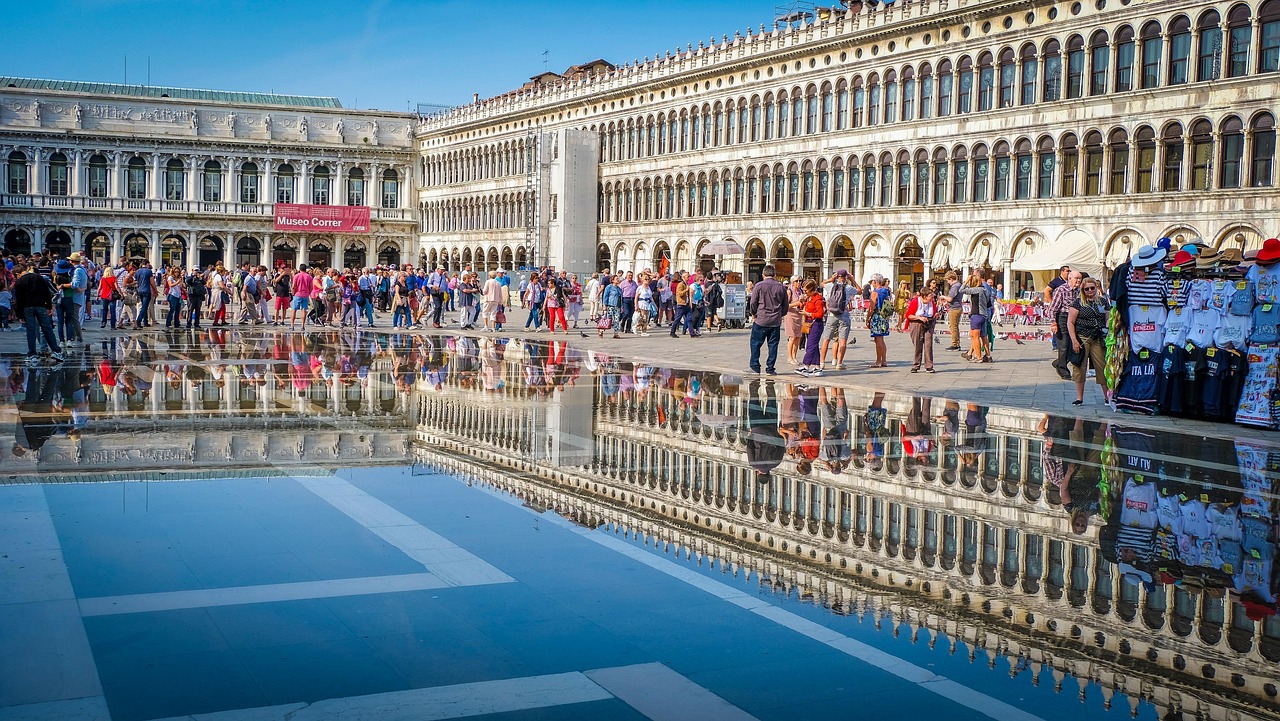
Tourists wading through knee-deep water in San Marco. Shopkeepers building barriers across doorways. Tables floating in cafés. The images are dramatic, alarming, and often accompanied by headlines suggesting Venice is sinking, drowning, or about to disappear beneath the waves.
The reality is significantly more complicated than any headline suggests.
Acqua alta — literally “high water” — has affected Venice for centuries. It’s not new. It’s not a crisis that developed in the past decade. And despite what viral photographs imply, Venice is not currently sinking beneath the Adriatic in any dramatic, imminent way.
But the flooding is real. The frequency has increased. Climate change is genuinely affecting Venice’s vulnerability. And visitors who arrive during acqua alta without understanding what’s actually happening find themselves confused, frustrated, and sometimes genuinely concerned that they’ve chosen the worst possible moment to visit.
After 28 years experiencing acqua alta from the resident perspective — not the tourist perspective of dramatic inconvenience but the local perspective of routine adaptation — I know exactly what high water actually means, how the MOSE barriers work, why flooding happens when it does, and how visitors can navigate Venice during acqua alta without panic or disappointment.
This is the honest explanation. What acqua alta actually is, stripped of both alarmist headlines and minimizing tourism marketing.
What Acqua Alta Actually Is
Before addressing flooding, MOSE barriers, or visitor strategies, it helps to understand what acqua alta literally means and what causes it.
Acqua alta is the periodic flooding of Venice caused by unusually high tides in the Adriatic Sea. The water doesn’t come from rain. It doesn’t come from rivers overflowing. It comes from the sea itself — tides that rise high enough to overtop the quays and flood low-lying areas throughout the city.
The Adriatic is a relatively shallow sea connected to the Mediterranean. When strong southeasterly winds (scirocco) push water northward up the length of the Adriatic while low atmospheric pressure simultaneously causes sea level to rise, the water has nowhere to go except into Venice’s lagoon. The lagoon connects directly to the city’s canals and lowest-lying areas. When the tide is high enough, the water simply floods across walkways, into campos, and sometimes into ground-floor buildings.
This happens primarily in autumn and winter — November through February sees the highest frequency of acqua alta events. The specific combination of wind, atmospheric pressure, and tidal timing that creates flooding occurs most commonly during these months.
Venice has always experienced acqua alta. Medieval Venetians dealt with flooding. Renaissance Venetians adapted to it. The phenomenon is as old as the city itself. What has changed is frequency — flooding that occurred perhaps three or four times annually in the 1950s now occurs dozens of times per year. This increase correlates directly with rising sea levels caused by climate change.
But the dramatic flooding that makes international news — water reaching 140cm or higher above normal sea level — remains relatively rare. Most acqua alta events involve water rising 80-100cm above normal. This floods Piazza San Marco and other low-lying areas but leaves most of Venice dry or only slightly wet. The truly dramatic flooding happens perhaps once or twice annually, sometimes less.
Understanding this distinction prevents panic. Seeing “Venice flooding” headlines doesn’t mean the city is underwater. It means specific low-lying areas experienced temporary flooding that residents adapted to and that typically resolved within a few hours as the tide receded.
Why San Marco Floods First (And Most Dramatically)
Anyone who’s seen acqua alta photographs notices that Piazza San Marco appears in nearly all of them.
This isn’t coincidence or photographic bias. San Marco is genuinely Venice’s lowest-lying area.
The piazza sits at approximately 64cm above normal sea level. This means that even moderate acqua alta — water rising 80cm above normal — floods the piazza with roughly 16cm of standing water. Higher tides create correspondingly deeper flooding.
The Basilica, the cafés, the surrounding arcades — all sit at this same low elevation. When the tide rises, San Marco transforms into a shallow lake. The photographs that alarm tourists worldwide are often taken from this single location during relatively moderate acqua alta events.
The rest of Venice sits higher. Most residential neighborhoods are elevated 100-120cm above normal sea level. This means moderate acqua alta that floods San Marco completely leaves Cannaregio, Dorsoduro, and most of Castello entirely dry. Even severe acqua alta reaching 120-130cm floods only specific low-lying streets and campos while leaving the majority of the city unaffected.
Visitors who see flooding in San Marco and assume the entire city is underwater are experiencing a distorted perspective. San Marco is Venice’s showcase — the most visited, most photographed, most commercially significant area. But it’s also the lowest-lying and therefore most vulnerable to even moderate tides. The flooding you see concentrated there doesn’t represent conditions throughout the city.
This geographic reality creates strange situations during acqua alta. Tourists trapped in San Marco hotels or attractions sometimes believe they’re stranded by flooding that barely affects neighborhoods ten minutes away. Walking from flooded San Marco into completely dry Castello or Cannaregio reveals how localized high water actually is — and how much Venice’s slight elevation variations matter.
How MOSE Actually Works
The MOSE system (Modulo Sperimentale Elettromeccanico — Experimental Electromechanical Module) is Venice’s primary defense against severe acqua alta.
MOSE consists of mobile barriers at the three inlets connecting Venice’s lagoon to the Adriatic Sea. These barriers lie flat on the seabed during normal conditions. When tides are forecast to exceed approximately 110cm above normal sea level, the barriers are raised — essentially closing the lagoon off from the Adriatic and preventing high water from entering.
The system took decades to build and was completed in 2020 after enormous cost overruns, corruption scandals, and delays that made MOSE a symbol of Italian bureaucratic dysfunction. But despite the troubled construction history, the engineering actually works.
When MOSE is activated, the barriers rise in roughly 30 minutes. The lagoon becomes isolated from the Adriatic. The tide that would have flooded Venice stays outside. The city remains dry despite conditions that would have previously caused severe flooding.
MOSE has been used dozens of times since becoming operational. The dramatic flooding that defined Venice in previous decades — water reaching 150cm or higher, the kind that filled St. Mark’s Basilica and created genuine crisis — no longer occurs when MOSE functions properly. The November 2019 flooding that devastated parts of Venice and made international headlines would not have happened had MOSE been operational then.
But MOSE isn’t perfect or problem-free:
The barriers require maintenance. Salt water and marine growth affect the mechanisms. Regular cleaning and repairs are essential. When maintenance is deferred or delayed, the barriers sometimes fail to rise properly.
Closing the lagoon creates environmental consequences. The lagoon’s ecosystem depends on tidal exchange with the Adriatic. Frequent MOSE activation disrupts this exchange, affecting water quality and marine life. The environmental impact requires careful management.
The system is expensive to operate. Each MOSE activation costs significant money — operating the barriers, maintaining the infrastructure, coordinating the complex logistics of closing and reopening Venice’s lagoon connections.
Climate change may eventually exceed MOSE’s design capacity. The system was designed for sea level conditions that may not persist through the century. If sea levels rise significantly beyond current projections, MOSE may need to be activated so frequently that the environmental and economic costs become prohibitive.
For now, though, MOSE works. Venice is protected against the severe flooding that previously threatened the city multiple times per year. The moderate acqua alta that still occurs — water rising 90-100cm, flooding San Marco but not activating MOSE — represents inconvenience rather than crisis.
What Acqua Alta Actually Looks Like for Visitors
The dramatic photographs suggest apocalyptic conditions. The reality is typically far more mundane.
During moderate acqua alta (80-100cm above normal):
Piazza San Marco floods with 5-15cm of standing water. Wooden walkways (passerelle) are installed across the piazza and surrounding streets, allowing pedestrians to cross flooded areas on raised platforms. Ground-floor shops in low-lying areas install barriers across doorways. Vaporetto service continues normally. Most of Venice remains completely dry.
The experience feels novel rather than dangerous. Tourists wade through shallow water while residents navigate elevated walkways with practiced efficiency. Cafés remain open. Museums function normally. The city adapts and continues.
During more severe acqua alta (110-130cm above normal):
MOSE is typically activated, preventing the flooding entirely. If MOSE isn’t activated for some reason, flooding becomes more widespread. Water reaches residential neighborhoods. More extensive walkway networks appear. Some vaporetto services are disrupted because boarding platforms become submerged. Ground-floor apartments may experience water entering.
This creates genuine inconvenience but not emergency. Venetians have lived with this pattern for centuries. Buildings are designed with flood resilience in mind — tiled floors that tolerate water, minimal ground-floor storage, drainage systems that clear water quickly once tides recede.
During extremely severe acqua alta (above 140cm):
MOSE should absolutely be activated, preventing this scenario entirely. The November 2019 flooding that reached 187cm — the second-highest acqua alta on record — occurred because MOSE wasn’t yet operational. With functional MOSE, this level of flooding should not occur again.
If it did occur (through MOSE failure or extraordinary circumstances), the flooding would be genuinely serious. Water would enter buildings throughout the city. Transportation would be severely disrupted. This represents actual crisis requiring emergency response.
But this scenario is precisely what MOSE was built to prevent. Betting against it means assuming simultaneous catastrophic failure of multiple engineered systems — possible but increasingly unlikely as the system matures.
How Venetians Actually Handle Acqua Alta
Watching Venetians navigate acqua alta reveals how normalized the phenomenon has become.
Residents check forecasts religiously during autumn and winter. The city operates a warning system — sirens that sound when acqua alta is forecast, with the number and tone of signals indicating expected water height. A single tone means 110cm (minor flooding). Multiple tones mean higher water and more extensive flooding.
When the sirens sound, Venetians adapt their schedules. Ground-floor residents move valuables to higher floors. Shop owners install metal barriers across doorways — surprisingly effective temporary defenses that seal entrances completely. Workers who need to cross flooded areas wear rubber boots or simply accept wet feet.
The adaptation is casual rather than panicked. Acqua alta is inconvenient in the way snow is inconvenient in cities accustomed to winter weather. You adjust, you cope, you wait for it to pass. The drama exists primarily for visitors who’ve never experienced it.
Schools sometimes close during severe acqua alta — not because buildings flood but because transportation becomes difficult and parents can’t reliably deliver children. Businesses may close ground-floor spaces while upper floors remain operational. Vaporetto schedules adjust when boarding platforms submerge.
Most Venetians own rubber boots (stivali) specifically for acqua alta. These tall boots — reaching mid-calf or knee height depending on how seriously the owner takes flooding preparation — allow walking through water without concern. Seeing elderly Venetians wade calmly through 20cm of water while tourists panic over wet shoes reveals the cultural normalization acqua alta has achieved.
How Venetians actually live includes adapting to acqua alta as routine inconvenience — not apocalyptic crisis but simply another complication in a city where daily life requires constant navigation of challenges that mainland cities never face.
The attitude is pragmatic. Acqua alta happens. It’s inconvenient. But it’s temporary — tides recede within a few hours, water drains quickly, and life returns to normal. Treating it as disaster would mean treating it as disaster dozens of times per year, which simply isn’t sustainable psychologically or practically.
Practical Strategies for Visitors During Acqua Alta
Arriving in Venice during acqua alta doesn’t ruin your trip. But it does require adjustment and understanding.
Check forecasts before your trip. The city’s official website (comune.venezia.it) provides acqua alta predictions several days in advance. If severe flooding is forecast during your visit dates, you can decide whether to adjust plans or proceed knowing what to expect.
Bring waterproof footwear — but don’t obsess over it. Tall rubber boots work best but aren’t essential unless severe flooding is forecast. Waterproof hiking boots or shoes work adequately for moderate acqua alta. Leather dress shoes or canvas sneakers become soaked disasters.
The solution isn’t necessarily bringing boots from home. Cheap rubber boots are sold throughout Venice during acqua alta season. Buying a pair locally and discarding them before departure costs perhaps €10-15 and solves the footwear problem completely.
Accept that some areas will be temporarily inaccessible. If San Marco is flooded and you don’t have waterproof footwear, you simply don’t visit San Marco that morning. The piazza will be dry again within hours. Waiting isn’t sacrifice — it’s practicality.
Use raised walkways (passerelle) when available. The city installs these temporary elevated platforms across heavily flooded areas. They’re narrow, crowded, and sometimes wobble alarmingly. But they allow crossing flooded spaces without entering water.
Walking on passerelle requires patience and courtesy. Single file often. Let faster-moving locals pass. Don’t stop mid-walkway to photograph. The platforms are transportation infrastructure, not tourist attractions.
Museums and churches remain open. Most major cultural sites are elevated enough that flooding doesn’t force closure. Even during moderate acqua alta, you can visit the Accademia Gallery, Ca’ Rezzonico, most churches, and other attractions without interruption. Indoor activities during acqua alta hours work perfectly.
Skip-the-line museum tickets become particularly valuable during acqua alta — when flooding limits outdoor movement, having guaranteed museum access allows productive use of time that might otherwise be wasted waiting for water to recede.
Treat acqua alta as atmospheric rather than disastrous. Venice during high water is genuinely beautiful in strange ways. The reflections in standing water. The fog that often accompanies flooding conditions. The dramatic light. The sense of being in a genuinely unusual city that exists nowhere else on earth.
Photographing acqua alta is acceptable — but photograph the conditions, not the inconvenienced locals. Venetians navigating flooded streets for work aren’t performing for cameras. Respect their daily routine while documenting the phenomenon.
Plan for flexibility. If your Venice itinerary is scheduled to the hour, acqua alta creates frustration. If your approach allows adapting to conditions — indoor activities during flooding, outdoor exploration once water recedes — acqua alta becomes interesting rather than ruinous.
The Myth vs. Reality of “Venice Is Sinking”
The headline “Venice is sinking” appears constantly. The reality behind the headline is complex enough that simple true/false answers don’t work.
Venice has been subsiding gradually for centuries. The city is built on wooden pilings driven into soft lagoon mud. This foundation compresses slowly over time. Additionally, groundwater extraction during the 20th century accelerated subsidence until the practice was banned in the 1970s.
Between 1950 and 1970, Venice subsided approximately 12cm. This subsidence stopped almost completely once groundwater extraction ended. The city is no longer sinking in any dramatic ongoing way through foundation collapse.
What has changed is sea level. The Adriatic is rising — not because Venice is sinking but because global sea levels are increasing due to climate change. This rising water means that the elevation difference between Venice and the sea is shrinking even if Venice itself isn’t subsiding.
The effect is identical. Whether Venice sinks or the sea rises, the practical result is increased flooding frequency. But understanding the actual mechanism matters for understanding solutions. You can’t stop Venice from sinking if it’s not actually sinking. But you might be able to manage rising sea levels through infrastructure like MOSE.
The apocalyptic timeline suggested by some headlines is false. Venice is not disappearing within decades. The city isn’t about to be abandoned to the sea. MOSE provides protection against current and near-term sea level rise. Additional infrastructure improvements continue. The city has resources, engineering capacity, and political will to adapt.
But long-term challenges are real. If sea levels rise significantly beyond current projections — say, one meter or more by 2100 — Venice’s situation becomes genuinely difficult. MOSE might need to be activated so frequently that environmental and economic costs become prohibitive. At some point, perpetually isolated lagoon becomes untenable.
This isn’t imminent crisis. It’s a management challenge playing out over decades. Venice has survived for 1,600 years through constant adaptation to its impossible geographic situation. Assuming it will suddenly fail ignores that entire history of successful problem-solving.
The reality of Venice includes genuine challenges alongside genuine beauty — neither alarmist “Venice is drowning” headlines nor dismissive “everything is fine” marketing tells the complete truth. The city faces real problems. It also possesses real solutions. Understanding both creates realistic rather than fantastical expectations.
Why Winter Venice Includes More Acqua Alta
Acqua alta occurs almost exclusively during autumn and winter months — November through February sees the vast majority of flooding events.
The meteorological conditions that cause acqua alta are seasonal. Strong southeasterly winds (scirocco), low atmospheric pressure systems, and the astronomical tides that amplify flooding all occur most frequently during autumn and winter. Summer rarely experiences conditions that create significant acqua alta.
This seasonal concentration means that visitors choosing winter Venice accept higher acqua alta probability as part of the experience. But this isn’t the disaster that it initially sounds like.
Winter Venice offers advantages that far outweigh acqua alta inconvenience for many visitors. The crowds drop dramatically. Accommodation costs decrease. The atmosphere intensifies — fog, dramatic light, the sense of experiencing Venice as it actually exists rather than as it performs for summer tourists.
Venice in winter deserves serious consideration despite acqua alta risk — the reduced tourist pressure, the atmospheric beauty, and the genuine access to residential neighborhoods often create more satisfying experiences than summer visits avoid flooding but offer crowded, expensive, touristic conditions.
Acqua alta during a winter visit might disrupt one morning out of three or four days. The MOSE barriers prevent the worst flooding. Moderate flooding creates interesting photography opportunities and memorable “I was there during high water” stories. The trade-off — one disrupted morning in exchange for three quieter, more atmospheric, more affordable days — favors winter for many travelers.
The key is arriving with realistic expectations. If you visit Venice in November-February and expect zero acqua alta, you’re setting yourself up for disappointment. If you visit those same months understanding that one day might involve flooded San Marco and waterproof boot requirements, you’ll adapt easily and probably find the experience genuinely interesting.
Winter visitors who check forecasts, bring appropriate footwear, and maintain schedule flexibility find that acqua alta adds character to their trip rather than ruining it. The photographs you take wading through Piazza San Marco become conversation pieces. The experience of watching Venetians casually navigate flooded streets while tourists panic provides insight into how the city actually functions.
What Climate Change Actually Means for Venice
Venice’s vulnerability to climate change is real — but understanding that vulnerability requires distinguishing between near-term and long-term challenges.
Near-term (next 10-20 years): Venice is relatively well-protected. MOSE functions. The barriers prevent severe flooding. Sea level rise during this period will be gradual enough that existing infrastructure handles it adequately. Acqua alta frequency may increase moderately, but MOSE activation covers the increase.
Medium-term (20-50 years): Challenges increase. Sea levels rise enough that MOSE requires more frequent activation. The environmental and economic costs of constantly isolating the lagoon become significant. Venice may need additional infrastructure — improved drainage, raised walkways, upgraded buildings — to maintain livability.
This is manageable with investment and political will. But it’s not trivial. The longer sea levels rise, the more expensive and complex Venice’s adaptation becomes.
Long-term (50+ years): Genuine uncertainty. If sea level rise exceeds one meter — possible under high-emission climate scenarios — Venice faces existential questions. MOSE might need near-constant activation. The lagoon ecosystem might collapse from perpetual isolation. The cost of maintaining city infrastructure might exceed available resources.
This isn’t guaranteed disaster. Technology improves. Engineering advances. Political priorities shift. Venice might develop solutions we can’t currently imagine. But the challenge is real enough that dismissing it as alarmist ignores legitimate scientific concern.
For visitors planning trips in the next decade, climate change doesn’t significantly affect Venice’s viability. The city will be there. It will function. Tourism infrastructure will continue. The main climate impact you’ll notice is potentially increased acqua alta frequency during autumn and winter visits.
For visitors thinking about whether Venice will exist for their grandchildren to visit — the honest answer is probably yes, but potentially with significant changes to how the city functions, what infrastructure exists, and how residents adapt to conditions we can’t fully predict today.
The Real Threat Isn’t Water — It’s Depopulation
Venice’s existential crisis isn’t flooding. It’s the residential population collapse.
Venice’s population has declined from 175,000 in the 1950s to roughly 50,000 today. This exodus continues. Young families leave because housing is unaffordable and daily logistics are exhausting. Young professionals leave because career opportunities don’t exist. Elderly residents leave when mobility limitations make navigating stairs and flooded streets impossible.
Acqua alta contributes to this exodus but isn’t the primary driver. The primary drivers are housing costs, tourism pressure, lack of basic services, and the cumulative weight of daily inconveniences that Venetians tolerate until they simply don’t anymore.
A Venice without residents becomes a museum. The neighborhoods empty. The shops convert to tourist services. The schools close. The social fabric that makes Venice a living city rather than a preserved artifact dissolves completely.
This matters more than flooding. MOSE can prevent high water from destroying buildings. But engineering can’t prevent people from leaving. Infrastructure can’t restore community once it’s gone.
Understanding how Venetians actually live reveals why so many eventually leave — not because acqua alta makes life impossible, but because the accumulation of challenges wears people down gradually until somewhere else simply seems easier.
Visitors concerned about Venice’s survival should worry less about water levels and more about residential sustainability. Supporting local businesses rather than tourist traps. Staying multiple nights rather than day-tripping. Visiting during off-season to reduce tourism pressure. Respecting residential neighborhoods as places where people actually live.
These actions won’t solve Venice’s depopulation crisis. But they support the conditions that make residential life slightly more sustainable — which matters more for Venice’s long-term survival than any amount of flood barrier engineering.
Plan Your Venice Visit Understanding Acqua Alta
For realistic expectations about Venice: The myth versus reality of Venice includes honest assessment of acqua alta, MOSE, and what flooding actually means for visitors. Understanding this before arrival prevents the panic and disappointment that often accompanies unexpected high water.
For winter Venice planning: Venice in winter offers experiences summer can’t match — despite higher acqua alta probability. The reduced crowds, the atmospheric conditions, and the genuine access to residential Venice often outweigh flooding inconvenience for travelers willing to adapt.
For understanding daily Venetian life: How Venetians actually live includes adapting to acqua alta as routine rather than crisis. Watching how residents navigate high water provides insight into the city’s genuine character beyond tourist performance.
For flexible indoor alternatives: Skip-the-line museum tickets become particularly valuable during acqua alta — when outdoor movement is limited, having guaranteed museum access allows productive, enjoyable use of time that might otherwise be wasted waiting for flooding to recede.
For insider guidance during your visit: A private tour with a licensed local guide provides real-time adaptation to acqua alta conditions. A knowledgeable guide knows which areas flood first, which routes stay dry, and how to navigate the city during high water without frustration or wasted time.
For water transport during flooding: A vaporetto pass provides unlimited water bus access — particularly valuable during acqua alta when some vaporetto services adjust but overall transportation continues. The pass eliminates worry about individual ticket costs during a day when route planning becomes more complex.
For approaching Venice thoughtfully: Venice without a checklist means accepting that conditions like acqua alta require flexibility rather than rigid itineraries. The best Venice experiences often happen when you adapt to what the city presents rather than fighting to execute predetermined plans.
Experience Venice Honestly — Including the Water That Occasionally Floods It
After 28 years living through countless acqua alta events and being featured by Rick Steves, NBC, and US Today, I know exactly what high water actually means — not the alarmist headlines or the dismissive marketing, but the reality that residents navigate and that thoughtful visitors can experience without panic. Acqua alta is part of Venice’s story. Understanding it honestly makes you a more informed, more adaptable, and ultimately more satisfied visitor. Let me show you Venice as it actually exists — water, flooding, and all.
Book a private Venice tour for real-time acqua alta guidance or secure museum tickets for flexible indoor alternatives — experience Venice with understanding rather than anxiety.
Frequently Asked Questions
Should I cancel my Venice trip if acqua alta is forecast?
No. Acqua alta forecasts predict conditions days in advance, but the predictions aren’t perfectly precise. Forecast flooding may not materialize, or may be less severe than expected. More importantly, even actual acqua alta typically affects only specific areas for a few hours. The flooding doesn’t make Venice inaccessible or un-visitable — it simply requires minor adjustments to your daily plans. Canceling an entire trip over forecast acqua alta is dramatic overreaction. Bringing waterproof footwear, checking which areas are flooded, and planning indoor activities during high water hours allows normal tourism to continue with minimal disruption.
Can I walk through flooded areas without rubber boots?
Technically yes, but it’s unpleasant and potentially unhygienic. The floodwater is seawater mixed with whatever else happens to be in Venice’s canals and streets. Walking through it in regular shoes means wet feet, soaked socks, and potentially exposing yourself to water you probably don’t want direct skin contact with. Moderate flooding (10-20cm depth) is walkable in waterproof hiking boots. Deeper flooding really requires proper rubber boots. The alternative is using raised walkways where available, which keeps you dry but limits your route options. Cheap rubber boots sold throughout Venice during acqua alta season solve this problem completely for €10-15.
Does acqua alta damage Venice’s buildings and art?
It can, though less dramatically than alarming headlines suggest. Ground-floor spaces in low-lying areas experience repeated water exposure that degrades walls, floors, and any materials stored there. This is why Venetian ground floors typically contain minimal valuable items and use water-resistant materials. Churches and museums at higher elevations rarely flood — the art inside remains protected. St. Mark’s Basilica, which sits at San Marco’s low elevation, does experience flooding during severe acqua alta. This causes genuine conservation concerns for the mosaics and marble. But MOSE now prevents the severe flooding that threatened the basilica most seriously. Moderate acqua alta that still occurs doesn’t typically reach the basilica’s interior.