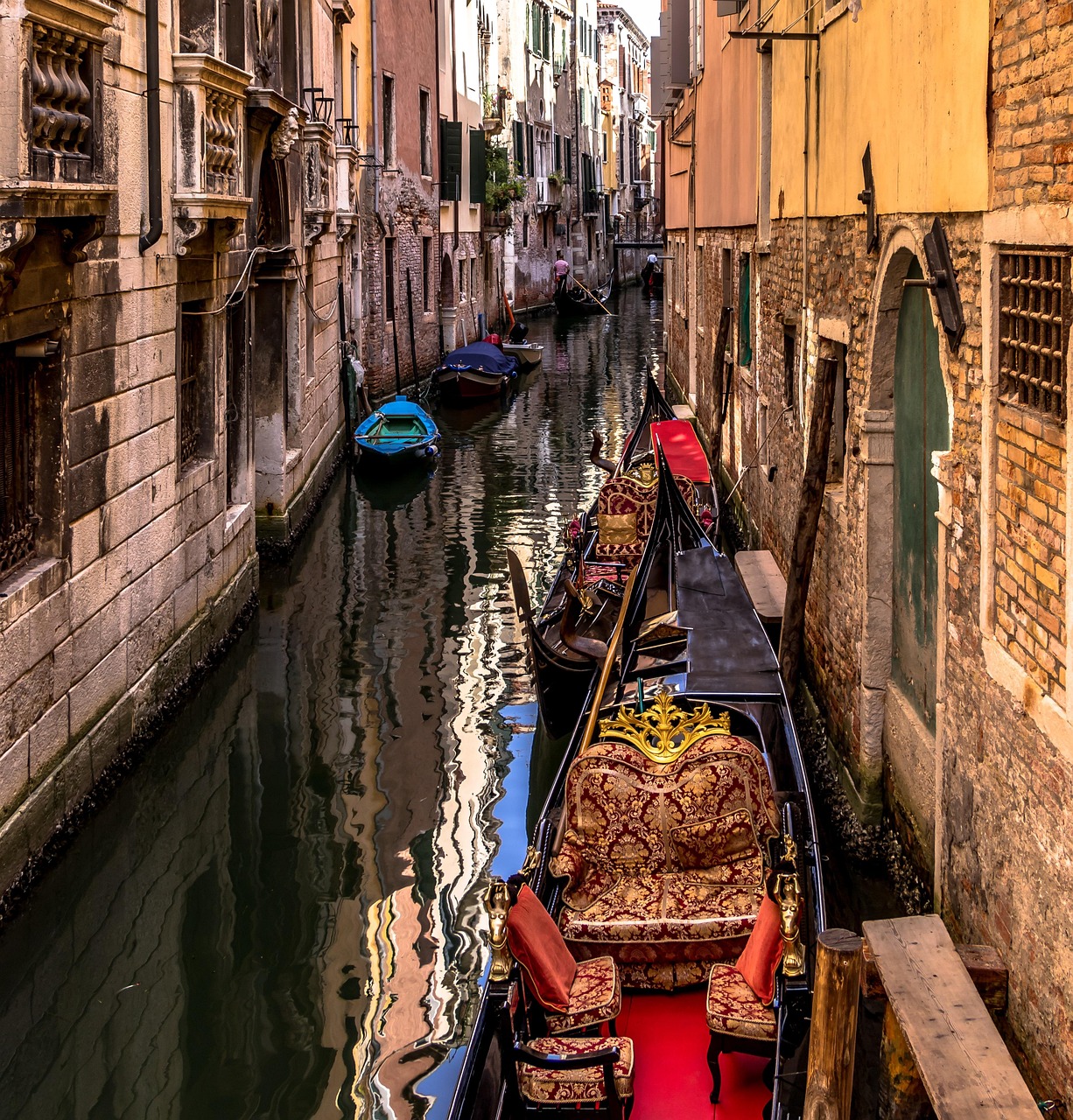
Venice has a reputation for draining wallets.
The reputation isn’t entirely unfair. Gondolas are expensive. Hotels cost more than comparable cities. Eating in tourist-facing restaurants adds up quickly. The city’s limited space and enormous demand create prices that feel punishing, especially for visitors expecting Italy to be affordable.
But this reputation obscures something important: some of Venice’s most extraordinary experiences cost absolutely nothing.
Not discounted. Not budget-friendly. Nothing. Free. Walking through one of the world’s most beautiful cities, experiencing art, architecture, history, and atmosphere without spending a single euro.
After 28 years living here, I’ve watched countless visitors exhaust themselves chasing paid experiences while walking past free ones without noticing. The churches with masterpiece paintings inside. The campos where Venice’s daily life unfolds. The viewpoints that rival anything you’d pay admission to see. The bridges at dawn when the city belongs entirely to you.
Venice rewards those who know where to look. And looking costs nothing.
1. Walk the Grand Canal at Dawn
The Grand Canal is Venice’s spine — the main waterway that divides the city into two halves. During the day, it’s crowded with vaporetti, water taxis, delivery boats, and tourist traffic. At dawn, it belongs to almost no one.
Walking the Grand Canal’s banks in early morning light — along the Zattere, or from the Accademia Bridge toward San Marco — reveals the canal in its most dramatic form. The water is still. The palaces catch the first light on their facades. Mist sometimes drifts across the surface, turning the scene into something that looks painted rather than real.
This costs nothing. It requires only waking early and walking. But the experience rivals anything Venice charges admission for.
2. Sit in Campo Santa Margherita
Campo Santa Margherita in Dorsoduro is one of Venice’s largest campos and one of its least touristy. In the evening, locals fill the outdoor café tables. Students from the nearby university gather. Children play. Vendors pack up the morning market’s remaining produce.
Simply sitting here — watching Venice function as a neighborhood rather than a tourist destination — provides something no museum or paid tour can replicate. A coffee at one of the campo’s bars costs the same as anywhere else in Venice. But the experience of watching ordinary Venetian life unfold around you is priceless.
3. Visit Venice’s Churches (Almost All Are Free)
This is Venice’s greatest secret, and it’s not really a secret at all. It’s simply that most visitors don’t think to look.
Venice contains dozens of churches, and the majority are free to enter. Many hold paintings and sculptures that would be the centerpiece of a major museum anywhere else in the world. Venetian painters — Titian, Tintoretto, Veronese, Bellini — decorated these churches over centuries. Walking in costs nothing. What you see inside rivals collections that charge significant admission fees.
A few specific churches deserve mention:
Santa Maria della Salute — the magnificent domed church at the entrance to the Grand Canal. Free entry. Inside, works by Titian and Tintoretto create an atmosphere of extraordinary artistic density. The dome alone, flooding the interior with light, justifies the visit.
San Giovanni in Bragora — a small church in Castello, easy to miss entirely. Inside, a Bellini painting and works by other major Venetian masters hang in near-complete obscurity. You might have the entire church to yourself.
Santa Maria Formosa — a campo and church in Castello that most tourists walk past. The church interior contains important works by Palma il Vecchio and a stunning altarpiece. Free. Quiet. Genuinely magnificent.
San Polo — one of Venice’s oldest churches, located in a campo that functions as a neighborhood gathering space. The interior holds works spanning centuries of Venetian painting. Free admission. Rarely crowded.
Venice’s churches function as a distributed, free art gallery scattered across the entire city. No single institution holds more important Venetian art than these churches collectively contain — and entering any of them costs nothing.
4. Climb San Giorgio Maggiore’s Bell Tower
Wait — this one actually charges a small admission fee. But it earns its place on this list because the experience it delivers rivals anything Venice offers at any price.
The bell tower of San Giorgio Maggiore — the island church directly across the basin from San Marco — offers 360-degree views of Venice, the lagoon, and the distant Alps on clear days. Unlike St. Mark’s Campanile, which crowds visitors into a brief, rushed experience, San Giorgio’s tower accommodates fewer people and allows genuine lingering.
The admission fee is modest. But the view is extraordinary. Sunset from this tower — watching Venice’s silhouette turn gold, then pink, then deep orange — creates memories that no amount of money spent elsewhere in Venice can match.
5. Watch the Vaporetto from Any Bridge
Venice has approximately 400 bridges. Most are unremarkable from a distance but become extraordinary observation points up close.
Standing on any bridge along the Grand Canal and watching vaporetti pass — the way they navigate tight turns, the wake they leave, the passengers boarding and departing — provides a window into Venice’s daily transportation rhythm that costs nothing and requires no reservation.
The Ponte dell’Accademia and the Ponte di Rialto offer the best Grand Canal perspectives. Smaller bridges throughout Cannaregio and Dorsoduro provide quieter, more intimate views of canal traffic on the smaller rii.
6. Explore Cannaregio After Sunset
Cannaregio is Venice’s largest sestiere and its most residential. After sunset, the neighborhood transforms into something genuinely magical — lamplit calli, quiet campos, the occasional sound of music drifting from an open window.
Walking Cannaregio’s streets in the evening costs nothing and reveals Venice at its most atmospheric. The tourist crowds have largely retreated to San Marco and the hotel districts. What remains is a neighborhood where people actually live, where cafés serve locals rather than visitors, and where the pace of life slows to something approaching the Venice that existed before mass tourism.
No map needed. No reservation required. Simply walk, follow interesting streets, and let the neighborhood reveal itself.
7. Sit at the Zattere at Sunset
The Zattere is a long promenade running along Dorsoduro’s southern waterfront, facing the Giudecca Canal. Unlike most Venetian walkways — narrow and hemmed by buildings — the Zattere offers open sky, wide pavement, and expansive water views.
Sunset from the Zattere is one of Venice’s most genuinely romantic experiences — and it costs absolutely nothing. The light turns golden. Boats cross the canal leaving gentle wakes. The Giudecca island catches the last sun. Sitting on a bench, watching this unfold, feeling the day end in one of the world’s most beautiful cities — this is Venice at its finest, and it requires only showing up.
A gelato from Gelateria Nico nearby adds the only expense worth considering. Everything else is free.
8. Walk the Perimeter of Dorsoduro
Dorsoduro occupies Venice’s southwestern tip, and walking its outer perimeter — from the Zattere along the waterfront, past the Punta della Dogana, up to the Accademia and back — creates one of the city’s most satisfying free walks.
The route combines waterfront views, historic churches, contemporary art museums (viewed from outside), and quiet residential streets. The entire loop takes roughly an hour at a leisurely pace. Every section offers something worth seeing. Nothing along the route charges admission simply for walking past it.
This is Venice as a walkable city rather than a collection of paid attractions. The experience is fundamentally different — and in many ways richer.
9. Visit the Jewish Ghetto
The Jewish Ghetto in Cannaregio holds one of Europe’s most important historical stories — and entering the campo costs nothing.
Campo del Ghetto Nuovo is free to walk through, sit in, and simply experience. The synagogue interiors require a guided tour (which does charge admission), but the campo itself — with its memorial plaques honoring Holocaust victims, its quiet atmosphere, and its centuries of history written into the architecture — deserves extended time regardless.
Sitting in this campo, reading the Stolpersteine memorial stones, understanding what happened here over five centuries — this creates one of Venice’s most meaningful free experiences.
10. Watch the Market Workers at the Rialto Before Dawn
The Rialto Market before sunrise belongs to Venice, not to tourists.
Arriving at 4:30 or 5:00 AM and watching wholesale buyers select fish, vendors arrange produce, and the city’s food supply chain operate at full efficiency costs nothing. No admission fee. No reservation required. Simply show up, dress warmly, and watch one of the world’s most unusual cities feed itself.
A coffee at one of the nearby cafés costs the same as anywhere in Venice. But what you witness around you — the genuine working rhythm of a city unlike any other — is free.
11. Find a Quiet Church and Simply Sit
Venice’s churches aren’t just repositories for art. They’re functioning places of worship — quiet, cool, and genuinely peaceful in a city that can feel relentlessly stimulating.
Ducking into any small church during a long day of walking provides immediate respite. The interior is cool. The light filters through ancient windows. The silence is complete. Sitting in a wooden pew, looking up at painted ceilings, breathing slowly — this costs nothing and restores energy more effectively than any café.
The churches of San Giovanni in Bragora, Santa Maria Formosa, San Giacomo dall’Oria, and dozens of others offer this experience. None charge admission. All welcome visitors who sit quietly and respectfully.
12. Walk Venice’s Smallest Campos
Venice contains hundreds of small campos — open squares that function as neighborhood gathering spaces. The famous ones (San Marco, Santa Margherita) attract visitors. The small ones attract almost nobody.
Finding these tiny campos — sometimes barely large enough for a dozen people — reveals Venice’s residential texture. A small fountain in the center. A church on one side. A few cafés or shops. Locals crossing through on their way somewhere else. The campo functions as a micro-neighborhood, a social unit small enough to feel intimate.
Walking Venice with attention to these small spaces — rather than rushing between major landmarks — creates an entirely different experience of the city. Free. Quiet. Genuinely Venetian.
13. Watch Sunset from the Ponte della Libertà
The long causeway connecting Venice to the mainland is one of the city’s least visited walking routes — and one of its best sunset viewpoints.
Walking the bridge at sunset, looking back toward Venice as the city silhouette turns gold against the western sky, provides a perspective impossible from within the city itself. You see Venice as a complete form — domes, towers, the Grand Canal’s curve — rather than experiencing it as immersive density.
The walk takes about twenty minutes each way. The view costs nothing. And the perspective it offers — Venice seen from outside, glowing in sunset light — rivals any paid viewpoint in the city.
14. Explore Giudecca Island
Giudecca is a long, narrow island directly south of central Venice. Most tourists never visit. This is exactly why it’s worth going.
Walking Giudecca’s waterfront costs nothing and delivers spectacular Venice skyline views — the kind where the entire city spreads before you across the water, silhouetted against the sky. The Church of Il Redentore, designed by Palladio, sits on the waterfront and is free to enter. The neighborhood retains the quiet, residential atmosphere Venice once had everywhere.
A vaporetto ride crosses the Giudecca Canal in minutes. Once there, the entire island rewards walking without any admission fee anywhere along the route.
15. Simply Get Lost
This sounds like advice. It’s actually the most important item on this list.
Venice’s greatest free experience isn’t any single location. It’s the act of wandering without destination. Following interesting streets. Turning corners without knowing what’s around them. Discovering campos, bridges, churches, and views that no guidebook mentions because they’re too small or too quiet to warrant inclusion.
Venice rewards this kind of attention more than almost any city on earth. The density of beauty — around every corner, down every calli, across every bridge — means that aimless walking produces discoveries constantly. Some of these discoveries are genuinely extraordinary. A stunning altarpiece in an empty church. A bridge framing a canal view so perfectly it looks staged. A campo where locals gather in the evening, completely unaware of tourists, completely absorbed in the simple pleasure of being in one of the world’s most beautiful cities.
This costs nothing. It requires no planning, no reservation, no ticket. It requires only presence, attention, and the willingness to let Venice surprise you rather than executing a predetermined itinerary.
Venice rewards wandering more than almost any other city on earth. The free experiences listed here aren’t consolation prizes for visitors who can’t afford paid attractions. They’re often better than what you’d pay for.
When You’re Ready to Spend: Making It Count
The free experiences above will fill days and create memories. But Venice also holds paid experiences worth every euro they cost — if you choose wisely.
Venice’s museums and cultural sites charge less than comparable institutions in London, Paris, or New York. The Accademia Gallery, Doge’s Palace, Ca’ Rezzonico — these collections are world-class, and their admission fees reflect reasonable value rather than tourist gouging.
When you’re ready for museum visits, skip-the-line tickets maximize your time — the real cost of waiting in queues isn’t the admission fee. It’s the hour or more spent standing in line that could be spent inside, actually experiencing the art and history these museums hold. Skip-the-line tickets eliminate this waste entirely, letting you move from the city’s free wonders to its paid ones without friction.
Some paid experiences punch well above their weight. Venice holds hidden gems that charge modest admission but deliver experiences entirely out of proportion to their cost.
Some hidden gems worth the admission: Scala Contarini del Bovolo — this extraordinary spiral staircase, tucked away in a small campo near Campo San Luca, charges a modest fee for access but delivers one of Venice’s most stunning architectural surprises. The Gothic spiral winds upward through an open loggia, offering increasingly dramatic views of Venice’s rooftops and canals. Almost no tourists find it. Those who do describe it as one of the city’s greatest discoveries. The admission fee is among the lowest in Venice — and the experience rivals far more expensive attractions.
The balance between free and paid experiences creates the most satisfying Venice visit. Spend mornings wandering for free — churches, campos, bridges, waterfront views. Reserve afternoons for one or two carefully chosen paid experiences that complement what you’ve already seen. This approach stretches budgets while ensuring nothing genuinely important is missed.
Plan Your Free Venice Days
For free cultural experiences: Venice’s churches collectively hold more important art than most cities’ paid museums. Walk in, look up, and spend time with what you find. No ticket required. No reservation needed. Simply enter and pay attention.
For when paid experiences matter: Skip-the-line museum tickets ensure that the money you do spend goes toward actual experience rather than waiting in queues. Choose two or three museums that genuinely interest you and visit them properly, rather than rushing through five museums superficially.
For hidden paid gems: Scala Contarini del Bovolo represents exactly the kind of modest-cost, extraordinary-experience discovery that makes Venice so rewarding. Seek out places like this — Venice holds dozens of them.
For understanding Venice as a living city: A private tour with a licensed guide can reveal the free experiences most visitors miss entirely — the churches worth visiting, the campos worth sitting in, the viewpoints worth walking to. A single guided morning can teach you how to spend the rest of your trip finding Venice’s best free experiences independently.
Experience Venice’s Real Wealth — It Was Never About Money
After 28 years living in Venice and being featured by Rick Steves, NBC, and US Today, I’ve watched thousands of visitors spend fortunes while missing the experiences that actually matter. The best Venice has to offer doesn’t always require a ticket. Let me show you where the real treasures are — most of them cost nothing at all.
Book a private Venice tour or secure skip-the-line tickets for when paid experiences are worth it — spend your money wisely and your time even more wisely.
Frequently Asked Questions
Are Venice’s churches really free to enter?
The vast majority are, yes. Venice contains dozens of churches open to visitors at no charge, many holding masterpiece paintings and sculptures. A handful of the most significant churches — the ones that have become major tourist attractions — now charge modest admission fees. But these are the exception, not the rule. Walking into a small, quiet church in Dorsoduro or Castello and finding a Bellini or a Tintoretto on the wall, completely free, remains one of Venice’s most reliable and extraordinary experiences.
Is it really possible to fill entire days with free activities in Venice?
Easily. Venice’s density of beauty means that walking itself is an activity — every street, every bridge, every campo offers something worth seeing. Combine morning walks with church visits, midday sitting in campos, afternoon waterfront strolls, and evening wandering through residential neighborhoods, and you’ve created a full, rich day without spending anything beyond coffee and food. The free experiences listed here aren’t a compromise. They’re genuinely some of Venice’s best offerings.
Won’t I miss important things by not paying for museum visits?
Some important things, yes. Venice’s major museums hold collections that deserve seeing — the Accademia, Doge’s Palace, Ca’ Rezzonico among them. But these museums are best experienced after you’ve spent time in the city absorbing its free offerings. Walking Venice’s streets, visiting its churches, understanding its neighborhoods — this context makes museum visits infinitely more meaningful. A visitor who spends three days walking freely and then visits the Accademia understands what they’re seeing in ways a visitor who goes straight to the museum on day one simply cannot. The free experiences don’t replace paid ones. They make paid ones matter more.