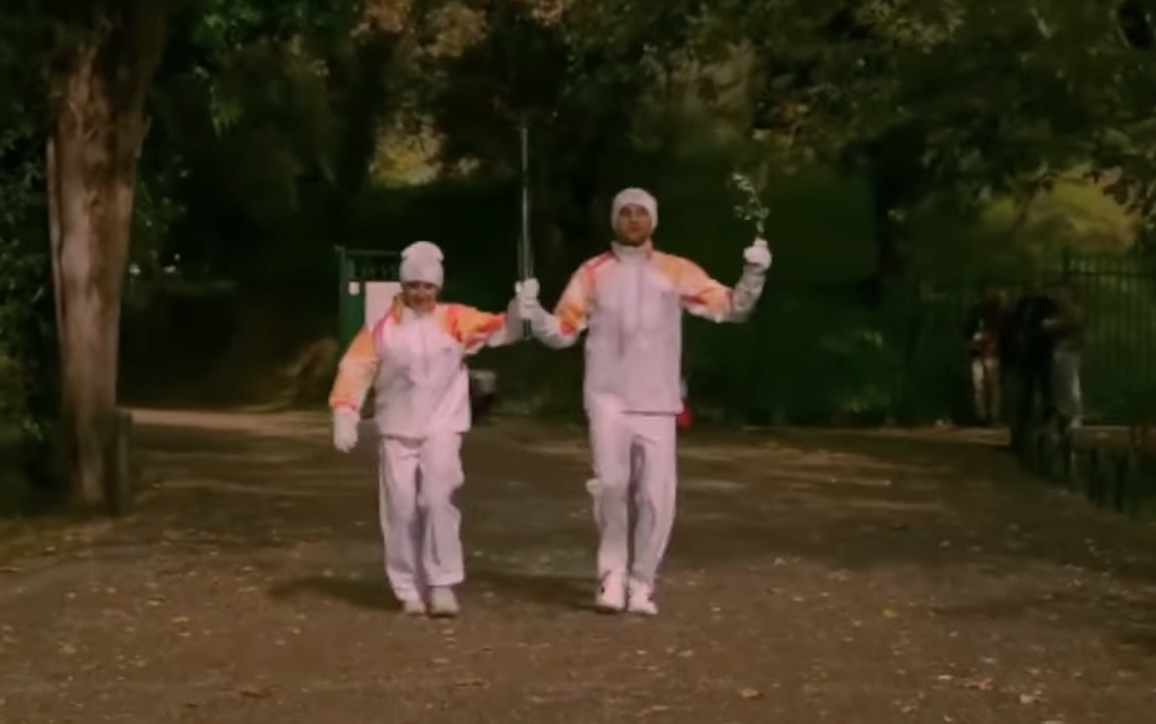
There are moments when sport becomes something more than competition. When it turns into ritual, memory, and shared emotion. The passage of the Olympic Torch is one of those moments — and on Thursday, January 22, Venice will once again become part of that timeless story.
As part of the journey toward the Milano Cortina 2026 Winter Olympic Games, the Olympic Flame will cross the western area of the Metropolitan City of Venice before entering the historic heart of the lagoon. Just as it did in 2006, during the Turin Winter Olympics, the torch will conclude its Venetian journey in Piazza San Marco — one of the most symbolic stages imaginable.
This is not simply a relay. It is a moving ceremony that connects places, people, and generations. In a city built on water, reflection, and memory, the Olympic Flame takes on a meaning that goes far beyond sport.
The Olympic Torch: A Symbol That Travels Through Time
The Olympic Torch is one of the most recognizable symbols in the world. Its origins date back to ancient Greece, where a sacred flame burned continuously during the ancient Olympic Games as a tribute to the gods. When the modern Olympics were revived, the flame was reintroduced to represent continuity, peace, and the connection between past and future.
Today, the Olympic Torch Relay is a journey that links countries, cities, landscapes, and communities. Each step of the relay is carefully designed to reflect the identity of the places it passes through. In Italy, and especially in Venice, this symbolism becomes even stronger.
Fire and water. Movement and stillness. Tradition and modernity. Venice is not just a backdrop — it is part of the message.
January 22: A Historic Day for Venice and the Olympic Journey
On Thursday, January 22, the Olympic Flame will cross the Metropolitan City of Venice in its western section before reaching the historic center. The day has been planned as a sequence of distinct moments, each with its own atmosphere and rhythm.
From mainland towns and river landscapes to canals, bridges, boats, and gondolas, this will be one of the most visually powerful stages of the entire relay.
Below is the complete itinerary, explained step by step — not just as a schedule, but as a story unfolding through territory, culture, and community.
09:00 – Stra: Where the Day Begins
The Olympic Flame begins its Venetian journey in Stra, a town deeply connected to the Brenta Riviera and its historic villas. The meeting point is scheduled for 9:00 AM in the town center, near the area of the historic “Antico Ritrovo” pizzeria.
From here, the torch relay starts moving along the SR11, passing by Villa Foscarini Rossi and continuing along Via Nazionale. This stretch of the relay connects everyday life with heritage architecture, blending the local rhythm of the town with the global symbolism of the Olympic Flame.
The arrival at Villa Pisani is expected around 9:40 AM. This monumental villa, once a symbol of Venetian power and elegance on the mainland, provides a fitting early stage for the flame — a place where history, art, and ceremony naturally converge.
10:30 – Chioggia: The Flame Meets the Sea
At approximately 10:30 AM, the Olympic Flame reaches Chioggia, often described as the “little Venice” of the southern lagoon. Here, the relay takes on a maritime character, deeply connected to fishing traditions, canals, and daily life shaped by water.
The route begins at Stadio Ballarin and continues across Ponte Cavanis, entering Corso del Popolo, the vibrant spine of the city. From there, the flame crosses Ponte Vigo, one of Chioggia’s most iconic bridges, before following the Fondamenta Canal Vena.
The final stretch passes over Ponte della Cuccagna and reaches Campo Marconi, where the arrival is scheduled around 11:10 AM. Here, institutional greetings and official moments mark the conclusion of the Chioggia stage.
In Chioggia, the flame is close to the water, the boats, the working life of the lagoon — reminding everyone that the Olympics belong not only to stadiums, but to people.
11:45 – Treviso: Inside the City Walls
The relay then moves inland to Treviso, a city of canals, medieval walls, and elegant squares. The Treviso stage begins around 11:45 AM at the CONI Gymnasium on Viale Vittorio Veneto.
From there, the torch enters the historic city through Porta Calvi, one of the ancient gates in the city walls. The route continues along Viale Cesare Battisti and Calmaggiore, Treviso’s main historic axis.
The symbolic heart of the city is reached at approximately 12:30 PM in Piazza dei Signori, a space defined by civic identity, social life, and history.
The relay does not stop there. The flame continues along Viale Martiri della Libertà, Via San Leonardo, Via Santa Caterina, Via Stangade, Via Carlo Alberto, Viale dei Mille, crosses Ponte Dante, and follows Riviera Garibaldi and Riviera Santa Margherita.
This long and articulated route turns the city itself into a living stage, involving neighborhoods, schools, and everyday streets — a reminder that the Olympic journey belongs to everyone.
14:45 – Mestre and Marghera: The Contemporary Face of Venice
At around 2:45 PM, the torch reaches Mestre, the mainland gateway to Venice. Here, the relay takes on a distinctly urban character.
The route begins in Via Pasqualigo and continues along Via San Donà, Viale Garibaldi, Via Palazzo, reaching Piazza Ferretto, the social heart of Mestre.
From there, the flame moves through Via Poerio, Via Brenta Vecchia, Via Carducci, Via Piave, and finally the Mestre Railway Station. Approximately twenty torchbearers will be involved in this section alone.
Between 4:00 and 4:35 PM, a short but symbolically important segment takes place in Porto Marghera, with a ceremony at the ENI biorefinery. This moment connects the Olympic message with themes of innovation, energy transition, and the future.
16:45 – Venice: Fire on Water
The most anticipated and emotionally powerful part of the day begins around 4:45 PM, when the Olympic Flame finally enters the historic city of Venice.
The starting point is Piazzale Roma, the last place in Venice accessible by road. From here, the torch crosses the railway station and proceeds along Strada Nuova, moving toward Campo San Bartolomio and the Rialto area.
Then comes the moment that only Venice can offer.
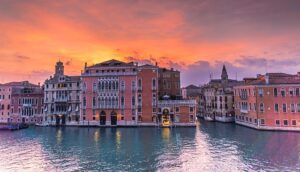
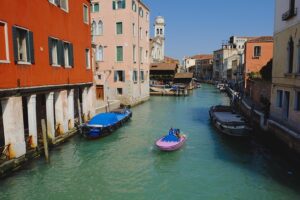
The torchbearers cross the Grand Canal between Rialto and Accademia not on foot, but by water. The flame is carried aboard the historic vessels Serenissima and Dodesona, accompanied by gondolas and traditional rowing boats from local rowing associations.
This aquatic procession transforms the Olympic relay into something almost mythical — fire floating on water, reflected in the canals, surrounded by oars, history, and silence.
The journey continues toward the Arsenale, the ancient heart of Venetian naval power. From there, the torchbearers disembark and proceed on foot along Riva degli Schiavoni.
The final destination is reached around 7:00 PM.
19:00 – Piazza San Marco: The Final Flame
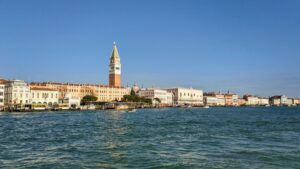
As evening falls, the Olympic Flame enters Piazza San Marco. This is the climax of the day, both symbolically and emotionally.
Here, in the most famous square in Venice, the Olympic cauldron is lit. The ceremony marks not only the end of the Venetian stage, but a direct link between Venice and the upcoming Winter Games.
It is a moment that connects 2006 and 2026, memory and expectation, tradition and future.
Traffic, Closures, and Practical Considerations
Throughout the day, temporary road closures, pedestrian diversions, and changes to public transportation are expected in all involved cities.
Local authorities recommend consulting official municipal channels for real-time updates. Visitors are encouraged to plan movements carefully, especially in Venice, where the relay will significantly affect pedestrian flows.
Why the Olympic Torch Matters in Venice
Venice is not just a stop on the route. It is a statement.
Bringing the Olympic Flame to Venice means celebrating culture, fragility, beauty, and resilience. It means showing the world that the Olympics are not only about arenas and speed, but about places that carry meaning.
On January 22, Venice will not just host the flame. It will reflect it.
Final Thoughts
The passage of the Olympic Torch through Venice is more than a scheduled event. It is a once-in-a-generation moment that blends sport, ritual, geography, and identity.
For those who witness it — whether from a bridge, a square, a boat, or a quiet calle — it will be a memory that lasts far beyond the Games themselves.
Fire will pass. Water will carry it. Venice will remember.