Most people don’t rush through Venice because they want to. They rush because they think they have to.
There is an invisible pressure that follows many first-time visitors: the fear of missing something. The assumption that Venice must be “done” quickly, efficiently, and completely, before time runs out. Bridges counted, churches ticked off, photos taken as proof.
But Venice is not a city that rewards completion. It rewards attention.
Those who approach Venice with a checklist often leave exhausted, slightly overwhelmed, and unsure why a place so beautiful felt strangely distant. Those who let the checklist go tend to leave quieter, slower, and more deeply satisfied — even if they’ve seen less.
Venice was never designed to be consumed. It was designed to be inhabited.
The city has no straight lines, no central axis meant to be conquered. It resists efficiency. Streets bend, routes change, and destinations reveal themselves only after you stop insisting on reaching them quickly.
This is not a flaw. It is the point.
Experiencing Venice without rushing does not mean doing nothing. It means doing fewer things with more presence. Walking instead of hopping between sights. Sitting instead of scrolling. Observing how the city moves when no one is posing for it.
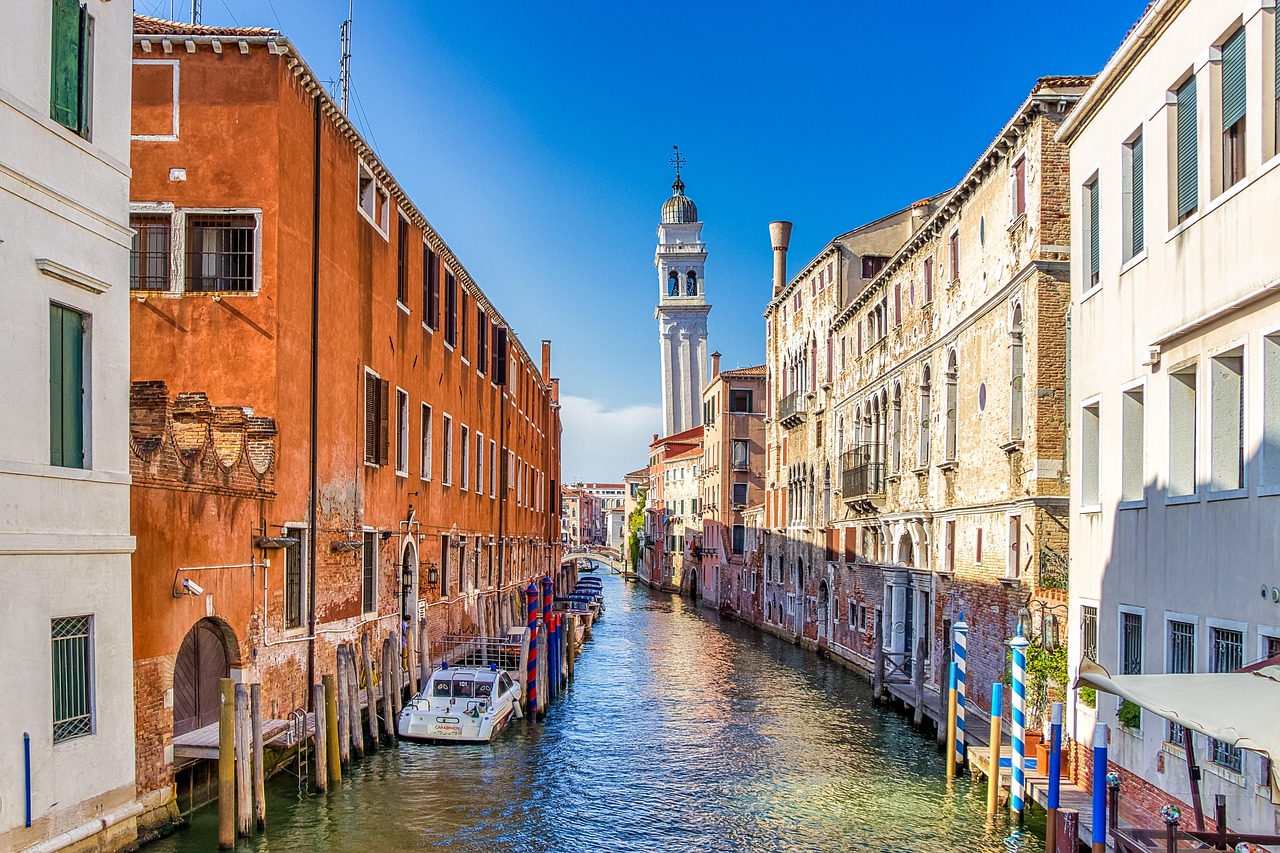
It means understanding that Venice is not made of highlights, but of transitions — the moments between one place and another, the pause on a bridge, the sound of water against stone, the way light shifts as clouds pass.
This is why many travelers find that their most vivid memories of Venice are not of famous monuments, but of small, unplanned moments: a quiet campo in the afternoon, a bar filled with local voices, a wrong turn that led somewhere unexpectedly right.
Rushing through Venice often comes from trying to experience it as a destination rather than a city. A destination asks for efficiency. A city asks for adaptation.
Venetians do not move through Venice with urgency. They move with timing. They choose routes based on rhythm, not distance. They avoid peak moments not out of irritation, but out of habit. Life here has taught them that slowing down is not a luxury — it is a necessity.
Visitors who tune into this rhythm often find the city opening up in subtle ways. Streets feel wider. Distances feel shorter. Crowds feel less intrusive. Venice becomes readable.
This shift often happens early for those who begin their stay with a Venice orientation walk with a local guide, not because they see more, but because they understand more. Orientation replaces urgency with confidence, and confidence replaces rushing.
Without a checklist, landmarks stop competing for attention. St. Mark’s Square can be visited in the early morning or late evening, not because it is “required,” but because the moment feels right. Museums are entered when curiosity calls, not when a schedule demands it.
Even practical choices begin to change. Walking replaces unnecessary boat rides. Neighborhoods replace corridors. Meals are chosen for atmosphere rather than reputation.
Luxury, in Venice, is not about exclusivity. It is about space — mental space, temporal space, the freedom to linger.
This is why some of the most meaningful Venice experiences are the quietest ones. A slow walk through Cannaregio. An unhurried afternoon in Dorsoduro. A museum visited without queues thanks to pre-booked tickets that remove pressure rather than add obligation.
Venice does not reward those who try to dominate it. It responds generously to those who listen.
When the checklist disappears, something else takes its place: trust. Trust that what you are experiencing is enough. Trust that Venice does not need to be exhausted to be understood.
And often, in that trust, the city reveals itself more fully than any plan ever could.
If you allow Venice to set the pace, you may discover that you don’t just visit the city — you inhabit it, if only briefly.
Experience Venice at Its Natural Pace
Frequently Asked Questions
Is it possible to enjoy Venice without seeing all the main attractions?
Yes. Many travelers find Venice more rewarding when they focus on atmosphere, neighborhoods, and daily life rather than trying to see every landmark.
How much time should be planned each day in Venice?
Less than most people expect. Allowing space between activities and leaving time unplanned leads to a more relaxed and meaningful experience.
Is Venice better experienced slowly?
Absolutely. Venice is designed for walking, observing, and lingering. Slowing down aligns visitors with the city’s natural rhythm.